
Blighia sapida (Aki) : medicinal properties | Lapo
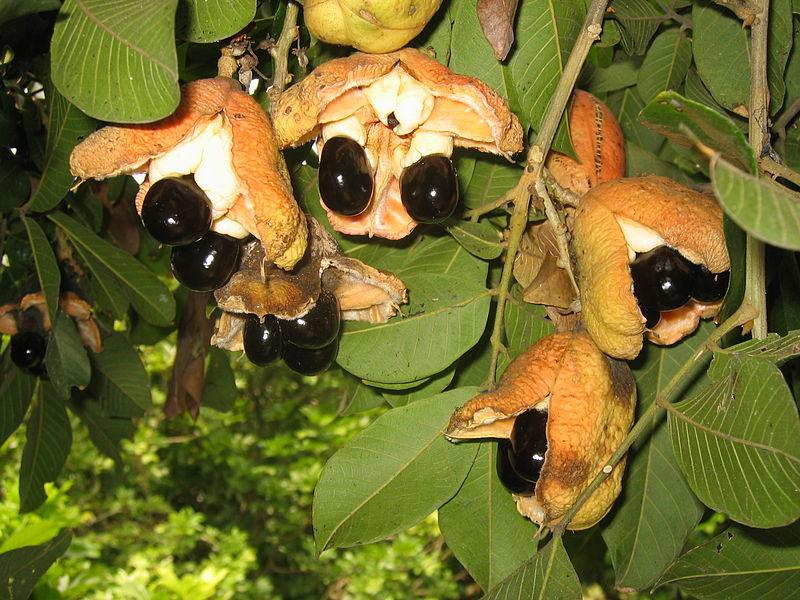
Blighia sapida (Aki) : medicinal properties in alcoholic extraction
Blighia sapida (Aki) — family Sapindacées.
This database documents alcoholic (ethanol) extractions of active substances. Our monograph currently lists 7 indications in alcoholic extraction for this species. The monograph draws on 55 scientific references recorded for the species.
Therapeutic indications in alcoholic extraction:
Note: scientific reference excerpts are kept in their original language (most often English), without translation, to respect the source text of publications.
- Osteoarthritis, arthritis, rheumatism, oedema : Plant part used: stem bark. Documented pharmacological profile: Diclofénac-like.
According to Sinmisola A (2019): Traditionally it is used to manage numerous ailments like backache, constipation, cancer, fever in young children, gonorrhea, dysentery, psychosis, hernia, stomach ache, malaria, rheumatism, typhoid etc. This review summarizes its phytochemistry, nutritional properties, ethnobotany & pharmacology. According to Yiadom KA (2018): n this study, the medicinal capabilities of Blighia sapida seeds are investigated by evaluating the antioxidant & antiproliferative activities on, lung, prostate, skin, leukemic cancers & normal liver cells using methods such as GC-MS, MTT & Resazurin based cell viability assays & DPPH/FRAP assays. - Plasmodiasis : Plant part used: stem bark. Documented pharmacological profile: Coartem-like.
According to Sinmisola A (2019): This review summarizes its phytochemistry, nutritional properties, ethnobotany & pharmacology. They are used in the management of diverse disease conditions such as diarrhoea, conjunctivitis, fever, internal hemorrhage, dysentery, cutaneous skin infections & bacterial infections amongst others. According to Yiadom KA (2018): n this study, the medicinal capabilities of Blighia sapida seeds are investigated by evaluating the antioxidant & antiproliferative activities on, lung, prostate, skin, leukemic cancers & normal liver cells using methods such as GC-MS, MTT & Resazurin based cell viability assays & DPPH/FRAP assays. - Type 2 diabetes mellitus : Plant part used: stem bark. Documented pharmacological profile: Glibenclamide-like.
According to OJO OA (2017): The significant increase in the lipid peroxidation (malonaldehyde), homeostasis model assessment-insulin resistance scores (HOMA-IR) & decrease in serum insulin, pancreatic β-cell scores as well as antioxidant marker enzymes in untreated diabetic rats compared to normal control rats were reversed by the BS stem bark ethanol extract & Glibenclamide. Methods: Diabetes was induced by intraperitoneal injection of alloxan (65 mg/kg body weight) for 21 days, and orally administered with Glibenclamide (5 mg/kg body weight), 50–150 mg/kg body weight of B. According to OLOYEDE OB (2014): Thus the antidiabetic activity of methanolic Blighia sapida leaf extract & its capability to halt oxidative stress & dyslipidemia in alloxan-induced diabetic rats were investigated.
Further indications (including other extraction modes where applicable), dosages, precautions for use and full scientific references are available in the complete monograph.
Lapotitjéri di la Nati medicinal database
Ethanolic extracts of active substances — monographs, indications, dosages and references for healthcare professionals. Ethnopharmacologist Emmanuel Nossin.
→ Search Blighia sapida in the database (subscription required)
Photo credit : Photo by Michael Hermann, unmodified (CC BY 4.0). License : CC BY 4.0.