
Borago officinalis (Bourach) : medicinal properties | Lapo
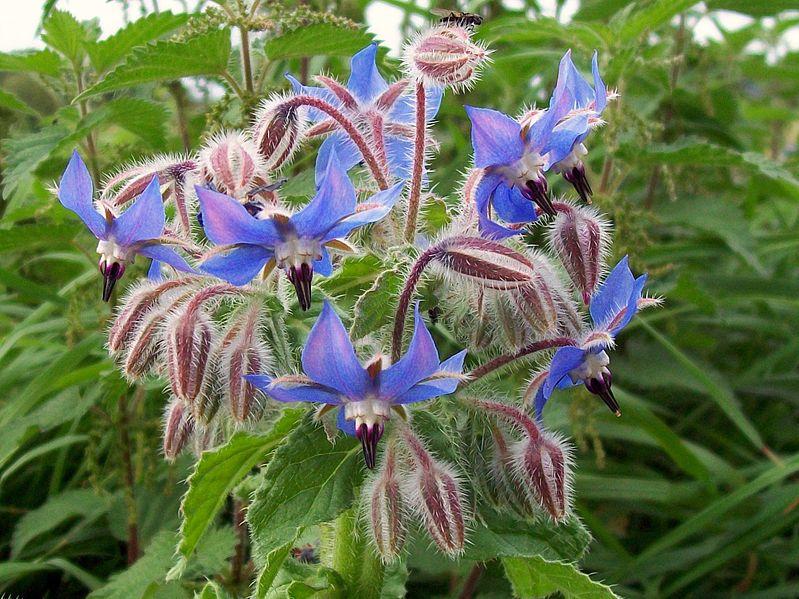
Borago officinalis (Bourach) : medicinal properties in alcoholic extraction
Borago officinalis (Bourach) — family Boraginacées.
Recognised external sources linked to this monograph: French Pharmacopoeia.
This database documents alcoholic (ethanol) extractions of active substances. Our monograph currently lists 9 indications in alcoholic extraction for this species. The monograph draws on 62 scientific references recorded for the species.
Therapeutic indications in alcoholic extraction:
Note: scientific reference excerpts are kept in their original language (most often English), without translation, to respect the source text of publications.
- Arthritis, osteoarthritis, oedema, rheumatism : Plant part used: Sheet. Documented pharmacological profile: Indometacine-like.
According to CONFORTI P (2008): All the extracts showed an anti-inflammatory effect: 300 μg/cm2 provoked oedema reductions ranging from 21 to 27%. Five hydroalcoholic extracts of edible plants from Calabria region (Italy) used in local traditional medicine for the treatment of inflammatory diseases were evaluated for their in vivo topical anti-inflammatory activity (inhibition of croton oïl-induced ear oedema in mice) and in vitro antioxidant and antiradical properties (inhibition of linoleic acid oxidation and bovine brain liposomes peroxidation, DPPH radical scavenging). According to Wauquier F (2012): Wauquier F et al, Borage and fish oils lifelong supplementation decreases inflammation & improves bone Health in a murine model of senile osteoporosis. - Convulsion, epilepsy : Plant part used: Whole plant. Documented pharmacological profile: Diazépam-like.
According to Selman M (2017): The aims of this research are to evaluate the effects of the ethanolic extract of the Borago officinalis on the convulsion in mice. The duration of convulsion significantly decreased (P < 0.05) in the group 2 as compared to group 1, group 3, group 4, & group 5. - Hepatitis, cirrhosis, fatty liver : Plant part used: Aerial_parts. Documented pharmacological profile: Silymarine-like.
According to HAMED AN (2015): The present study aims to investigate the hepatoprotective effect of Borago officinalis aerial ethanolic extract (BAEE) against CCl4-induced liver damage in comparison to silymarin, a Classical antioxidant liver medicine. The hepatoprotective potential of BAEE in rats was evaluated following oral administration of CCl4, which enhanced hepatic lipid peroxidation & notably depleted reduced glutathione.
Further indications (including other extraction modes where applicable), dosages, precautions for use and full scientific references are available in the complete monograph.
Lapotitjéri di la Nati medicinal database
Ethanolic extracts of active substances — monographs, indications, dosages and references for healthcare professionals. Ethnopharmacologist Emmanuel Nossin.
→ Search Borago officinalis in the database (subscription required)
Photo credit : Photo by Peter O’connor without modification (CC BY-SA 2.0). License : CC BY-SA 2.0.