Clidemia hirta (Prino) : medicinal properties | Lapo
Clidemia hirta (Prino) : medicinal properties in alcoholic extraction
Clidemia hirta (Prino) — family Melastomacées.
This database documents alcoholic (ethanol) extractions of active substances. Our monograph currently lists 7 indications in alcoholic extraction for this species. The monograph draws on 11 scientific references recorded for the species.
Therapeutic indications in alcoholic extraction:
Note: scientific reference excerpts are kept in their original language (most often English), without translation, to respect the source text of publications.
- Bacterial infection : Plant part used: sheet. Documented pharmacological profile: Amoxicilline-like.
According to Abdellaoui SEl (2014): Abdellaoui SEl et al, Centrifugal partition chromatography for antibacterial bio-guided fractionation of Clidemia hirta roots. According to Rahayu E (2021): The conclusion is that ethanol extract is included in the category of very strong antibacterial activity, while Aqueous & n-hexane are categorized as strong in inhibiting the growth of pathogenic bacteria,. Measurement of antibacterial activity by looking at the minimum inhibitory concentration of C. - Glycation (AGEs), skin and vascular ageing : Plant part used: sheet. Documented pharmacological profile: Aminoguanidine-like.
According to Azahar N (2019): Therefore, it can conclude that Melastoma especially from C hirta species could be one of the potential sources of antioxidants as sunscreen products & also for utilization for cosmeceutical, neutraceuticals & medicinal use in the future to overcome various disease. According to Junedi S (2023): affine ethanol extracts to identify and obtain candidate photoprotective ingredients for sunscreen products. Natural substances with high antioxidant activity potentially inhibit UV-induced skin photoaging. - Oxidative stress : Plant part used: sheet. Documented pharmacological profile: Acide ascorbique-like.
According to Azahar N (2019): Therefore, this work aimed to investigate the photo-protective ability & antioxidant potential using DPPH-free radical scavenging assay, total phenolic content and FRAP-reducing power assay. Meanwhile, the three of antioxidant assay shows that C hirta ethyl acetate displays higher antioxidant activity against DPPH radical & contain higher phenolic and FRAP value as compared to other Melastoma species. According to Amzar N (2017): The development of oxidative stress was observed through the escalation of hepatic lipid peroxidation, depletion of glutathione, & reduced antioxidant enzymes (glutathione peroxidase, glutathione reductase, catalase, glutathione S-transferase & quinone reductase).
Further indications (including other extraction modes where applicable), dosages, precautions for use and full scientific references are available in the complete monograph.
Lapotitjéri di la Nati medicinal database
Ethanolic extracts of active substances — monographs, indications, dosages and references for healthcare professionals. Ethnopharmacologist Emmanuel Nossin.
→ Search Clidemia hirta in the database (subscription required)
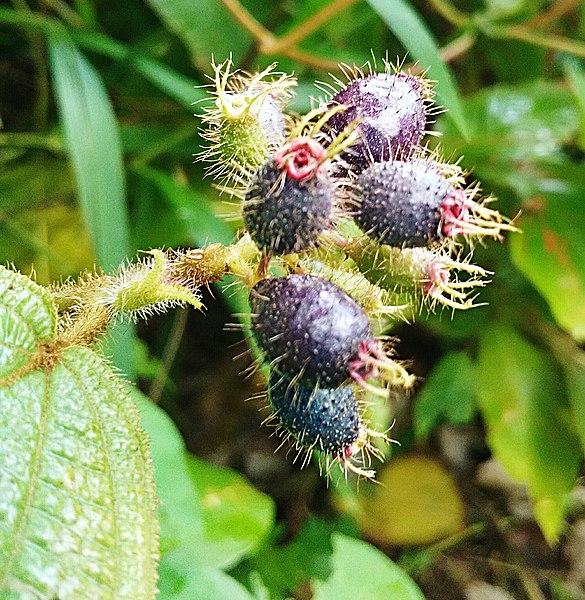
Photo credit : Photo by Filo gèn' without modification (CC BY 4.0). License : CC BY 4.0.