
Eupatorium odoratum (Fléri-nowèl) : medicinal properties | Lapo
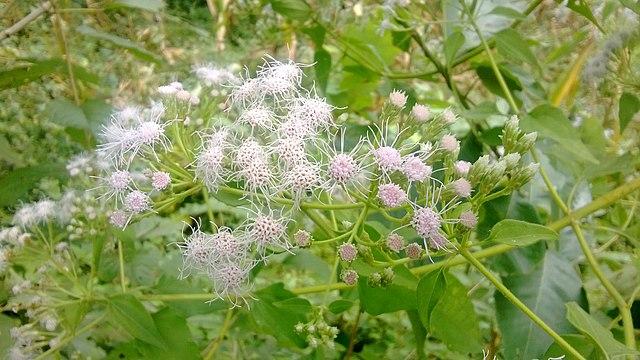
Eupatorium odoratum (Fléri-nowèl) : medicinal properties in alcoholic extraction
Eupatorium odoratum (Fléri-nowèl) — family Astéracées.
Recognised external sources linked to this monograph: TRAMIL and French Pharmacopoeia.
This database documents alcoholic (ethanol) extractions of active substances. Our monograph currently lists 27 indications in alcoholic extraction for this species. The monograph draws on 141 scientific references recorded for the species.
Therapeutic indications in alcoholic extraction:
Note: scientific reference excerpts are kept in their original language (most often English), without translation, to respect the source text of publications.
- Bacterial infection : Plant part used: Sheet. Documented pharmacological profile: Ampicilline-like, Gentamycine-like, Tétracycline-like.
According to IROBI ON (1997): The extract produced measurable zones of inhibition (6.5–16 mm) against reference microbial strains and hospital isolates including Bacillus thuringiensis (var Israeli), Bacillus stearothermophilus (NCTC 10339), Staphylococcus aureus (NCTC 6571), Escherichia coli (NCTC 11699), Pseudomonas sp., Streptococcus faecalis & Klebsiella sp. Zones of inhibition were also diminished by heating the extract (40–80°C) although its antimicrobial activity was not totally lost when heated to 120°C. According to Nwinuka N (2009): The anti-bacterial effects of the methanolic extracts were positive for Bacillus subtilis, Klebsiella Pneumoniae, Staphylococcus aureus, and negative for Pseudomonas pyrogenes & Escherichia coli. - Rheumatism, osteoarthritis, arthritis, oedema : Plant part used: Sheet. Documented pharmacological profile: Indometacine-like.
According to CHAKRABORTY ANUP K (2010): It is also found in Koraput district and extensively used traditionally by the tribal people as antiinflammatory, analgesic, Antiprotozoal agent’s e.t.c. According to Umukoro S (2006): Evaluation of Antiinflammatory & membrane stabilizing Effects of Eupatorium odoratum. - Pain, hyperalgesia : Plant part used: Sheet. Documented pharmacological profile: Aspirine-like.
According to CHAKRABORTY ANUP K (2010): It is also found in Koraput district and extensively used traditionally by the tribal people as antiinflammatory, analgesic, Antiprotozoal agent’s e.t.c. According to Jena PK (2010): All the different extracts such as petroleum ether extract, chloroform extract & ethanolic extract has been subjected to analgesic activity studies. It has been found that only ethanolic extract (P<0.01) shows maximum analgesic activity at a dose of 300 mg/kg whereas petroleum ether extract & chloroform extract shows moderate activity at the same dose when compared with the standard drug aspirin.
Further indications (including other extraction modes where applicable), dosages, precautions for use and full scientific references are available in the complete monograph.
Lapotitjéri di la Nati medicinal database
Ethanolic extracts of active substances — monographs, indications, dosages and references for healthcare professionals. Ethnopharmacologist Emmanuel Nossin.
→ Search Eupatorium odoratum in the database (subscription required)
Photo credit : Photo by Krish Dulal without modification (CC BY-SA 3.0). License : CC BY-SA 3.0.