Laurus nobilis (Lôyé-sôs) : medicinal properties | Lapo
Laurus nobilis (Lôyé-sôs) : medicinal properties in alcoholic extraction
Laurus nobilis (Lôyé-sôs) — family Lauracées.
Recognised external sources linked to this monograph: French Pharmacopoeia.
This database documents alcoholic (ethanol) extractions of active substances. Our monograph currently lists 13 indications in alcoholic extraction for this species. The monograph draws on 73 scientific references recorded for the species.
Therapeutic indications in alcoholic extraction:
Note: scientific reference excerpts are kept in their original language (most often English), without translation, to respect the source text of publications.
- Cancer : Plant part used: Sheet. Documented pharmacological profile: Cisplatine-like.
Selon Gany SZ (2010) : Activity against AMN3 (mouse mammary adenocarcinoma), REF (rat embryo fibroblast) & Hela (cervical human carcinoma cell line taken from Henrietta Lacks established 1951) was established with OD of 0.054, 0.05 & 0.1 respectively at the concentration 500 µg/ml with incubation period 24 h. Selon Al-Kaladeh JZ (2010) : In the present study, selected spices used in Jordan were chemically analyzed & investigated for their antiproliferative activity to the adenocarcinoma of breast cell line (MCF7). The antiproliferative activities of the hydrodistilled volatile oils & the crude ethanol & water extracts were evaluated using the Sulphorhodamine B assay. - Bacterial infection : Plant part used: Sheet. Documented pharmacological profile: Amoxicilline-like, Cefazoline-like.
Selon Erturk O (2011) : Eleven ethanolic extracts from spices of Melissa officinalis(FR:FE), Mentha piperita((Se), Laurus nobilis(Fe), Rhus coriaria, Dianthus coryophyllum, Piper nigrum(Se), Capsicum annum (Fr), Juniperus oxycedrus, Erica arborea, Colutea arborescens, & Cuminum cyminum(Fr) collected from various regions of Turkey & local markets were assayed for the in vitro antibacterial activity against 3 Gram-positive (Bacillus subtilis, Staphylococcus aureus & S. epidermidis) & 2 Gram-negative bacteria (Escherichia coli & Pseudomonas aeruginosa), using agar dilution methods. Selon Sakran AK (2021) : nobilis leaves had the antibacterial activity against Staphylococcus aureus with a zone of inhibition (16.3 ±1.5 mm), S aureus with (14.5±0.5 mm), and weak antimicrobial activity against Escherichia coli (11.3±1.1mm). - Fungal infection : Plant part used: Sheet. Documented pharmacological profile: Nystatine-like.
Selon Erturk O (2011) : In addition, their possible toxicity to Candida albicans & Aspergillus niger was determined, using both agar dilution & disc-diffusion methods. niger than the standard antifungal nystatin. Selon ZAZHARSKYI V (2019) : This article analyzes the effectiveness of the action of extracts of plants on microorganisms: six species of bacteria (Salmonella typhimurium, Listeria monocytogenes, Escherichia coli, Klebsiella pneumoniae, Corynebacterium xerosis, Proteus vulgaris) & one fungus (Candida albicans).
Further indications (including other extraction modes where applicable), dosages, precautions for use and full scientific references are available in the complete monograph.
Lapotitjéri di la Nati medicinal database
Ethanolic extracts of active substances — monographs, indications, dosages and references for healthcare professionals. Ethnopharmacologist Emmanuel Nossin.
→ Search Laurus nobilis in the database (subscription required)
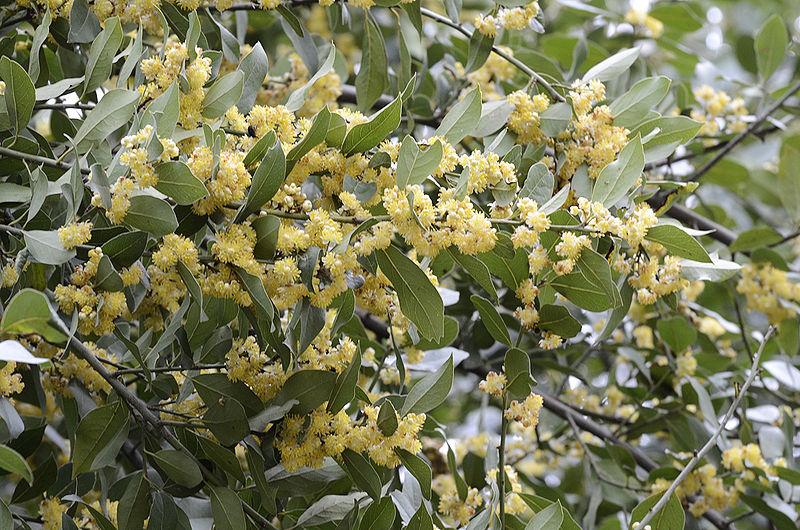
Photo credit : Photo by Zeynel Cebeci without modification (CC BY-SA 4.0). License : CC BY-SA 4.0.