Pinus caribaea (Pen-Karayib) : medicinal properties | Lapo
Pinus caribaea (Pen-Karayib) : medicinal properties in alcoholic extraction
Pinus caribaea (Pen-Karayib) — family Pinacées.
This database documents alcoholic (ethanol) extractions of active substances. Our monograph currently lists 3 indications in alcoholic extraction for this species. The monograph draws on 36 scientific references recorded for the species.
Therapeutic indications in alcoholic extraction:
Note: scientific reference excerpts are kept in their original language (most often English), without translation, to respect the source text of publications.
- Dermatomycosis : Plant part used: Sheet. Documented pharmacological profile: Nystatine-like.
Selon Rivero López M (1997) : An study was carried out with the aim of to prove in vitro antifungal activity against filamentous fungi of alcoholic & aqueous extracts from leaves of Pinus caribaea, by method of diffusion versus different fungi, like Microsporum gypseum, Trichophytum mentagrophytes, Microsporum canis, & Trichophyton rubrum, which are common producers of superficial mycosis in our population. rubrum, although showed same activity. Selon López MR (1997) : Con el objetivo de demostrar la actividad Antifúngica in vitro frente a hongos filamentosos de los extractos acuoso y Alcohólico de hojas de Pino macho, se realiza un estudio por el método de difusión y se enfrentan éstos a diferentes especies de hongos como Microsporum gypseum, Trichophyton mentagrophytes, Microsporum canis, Trichophyton rubrum, productores frecuentes de micosis superficiales en nuestra población. - Cancer : Plant part used: Bark.
Selon Unten B (1989) : Antitumor substances (Fractions VI & VII) prepared from the NaOH extract of pine cône significantly stimulated the iodination (incorporation of radioactive iodine into an acid-insoluble fraction) of human peripheral blood adherent mononuclear cells, polymorphonuclear cells (PMN), & human promyelocytic leukemic HL-60 cells. Iodination of HL-60 cells, which were induced to differentiate by treatment with either Retinoic acid or tumor necrosis factor, were stimulated less than untreated cells. Selon Zhang Z (2009) : The results indicated that the procyanidins extracted with water had a stronger inhibition on promyelocytic cells HL-60, an effective inhibition on human stomach adenocarcinoma cells BGC-823 & human hepatocellular carcinoma cells BEL-7402, but no effect on human lung carcinoma cells A549, whereas the procyanidins extracted with ethanol had an effective inhibition on HL-60 & BGC-823, but no effect on A549 or BEL-7402. - Mosquito control : Plant part used: Pest control and veterinary products.
Selon Kanis LA (2009) : In this study, the larvicidal activity of dried leaf extracts from Pinus caribaea Morelet against Aedes aegypti was evaluated for the first time.
Further indications (including other extraction modes where applicable), dosages, precautions for use and full scientific references are available in the complete monograph.
Lapotitjéri di la Nati medicinal database
Ethanolic extracts of active substances — monographs, indications, dosages and references for healthcare professionals. Ethnopharmacologist Emmanuel Nossin.
→ Search Pinus caribaea in the database (subscription required)
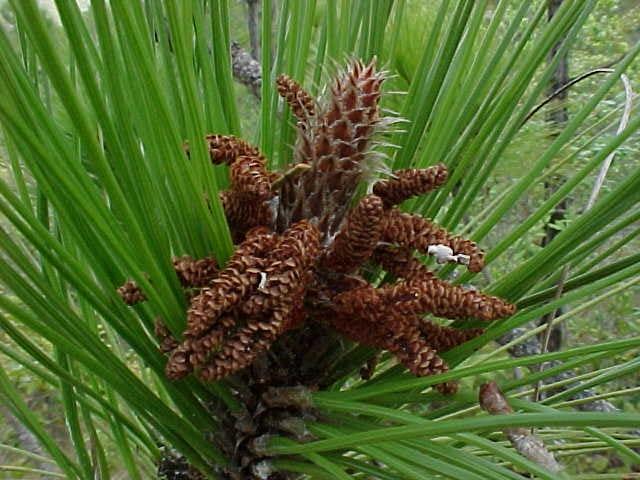
Photo credit : Photo by Vova-goc without modification (CC BY-SA 3.0 RS). License : CC BY-SA 3.0 RS.