
Quassia amara (Kina) : medicinal properties | Lapo
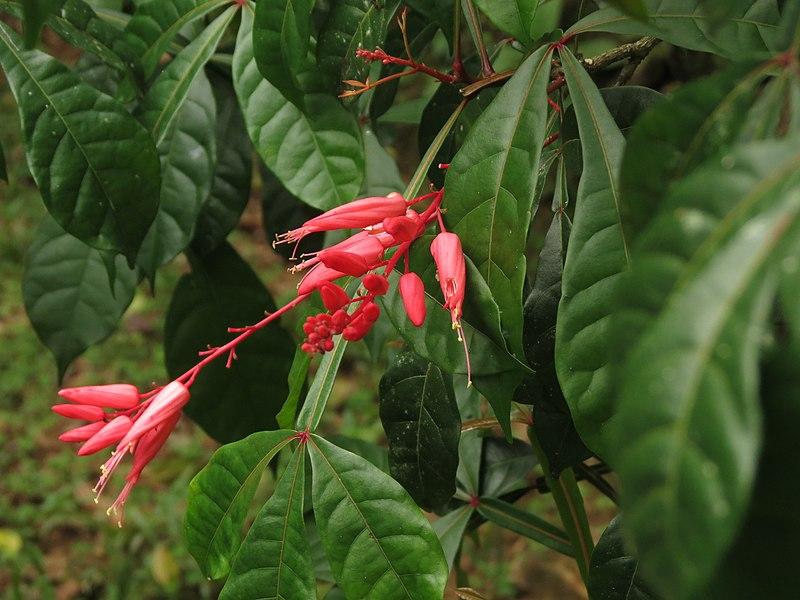
Quassia amara (Kina) : medicinal properties in alcoholic extraction
Quassia amara (Kina) — family Rubiacées.
Recognised external sources linked to this monograph: TRAMIL and French Pharmacopoeia.
This database documents alcoholic (ethanol) extractions of active substances. Our monograph currently lists 5 indications in alcoholic extraction for this species. The monograph draws on 66 scientific references recorded for the species.
Therapeutic indications in alcoholic extraction:
Note: scientific reference excerpts are kept in their original language (most often English), without translation, to respect the source text of publications.
- Osteoarthritis, arthritis, rheumatism, oedema : Plant part used: Bark. Documented pharmacological profile: Indometacine-like.
Selon TOMA W (2003) : However, when administered intraperitoneally, the HEX extract decreased the paw edema induced by carrageenan, showed antinociceptive effects on the hot-plate test & on acetic acid-induced writhing, & showed sedative effects on pentobarbital-induced sleep. Selon Fiaschetti G (2011) : Many molecules display a wide range of inhibitory effects, including anti-inflammatory, anti-viral, anti-malarial & anti-proliferative effects on various tumor cell types. These molecules gained notoriety after the initial discovery of the anti-leukemic activity of one member, bruceantin, in 1975. - Head lice : Plant part used: Pest control and veterinary products. Documented pharmacological profile: Clophenothane-like.
Selon Jensen O (1978) : 454 patients were treated with quassia tincture for head lice. At examination one week later only three patients had hatched lice. Selon Auteur (1991) : Prophylaxis & treatment of pediculosis with Quassia amarga. - Fungal infection : Plant part used: Bark.
Selon Diehl C (2016) : Contrarily, QWE had no effect on the growth of Chlamydia trachomatis, but uniquely altered the morphology & quantity of chlamydial inclusions.To the best of our knowledge, this is the first time that QWE is shown to have antiparasitic activity on Trichomonas vaginalis & Demodex spp, an antifungal activity on Malassezia furfur & Candida spp & an antibacterial activity on P. krusei, the latest at a lesser extent, & Malassezia furfur isolated from samples of infected patients, inhibiting the growth of fungi in both a time- & dose-dependent manner.The antibacterial activity of QWE was demonstrated in cultures of P. Selon AJAIYEOBA EO (2003) : AJAIYEOBA EO et al, Antibacterial & antifungal activities of Quassia undulata & Quassia amara extracts in vitro.
Further indications (including other extraction modes where applicable), dosages, precautions for use and full scientific references are available in the complete monograph.
Lapotitjéri di la Nati medicinal database
Ethanolic extracts of active substances — monographs, indications, dosages and references for healthcare professionals. Ethnopharmacologist Emmanuel Nossin.
→ Search Quassia amara in the database (subscription required)
Photo credit : Photo by iNaturalist.org without modification (CC BY 4.0). License : CC BY 4.0.