Zea mays (Mayi) : medicinal properties | Lapo
Zea mays (Mayi) : medicinal properties in alcoholic extraction
Zea mays (Mayi) — family Poacées.
Recognised external sources linked to this monograph: TRAMIL and French Pharmacopoeia.
This database documents alcoholic (ethanol) extractions of active substances. Our monograph currently lists 13 indications in alcoholic extraction for this species. The monograph draws on 51 scientific references recorded for the species.
Therapeutic indications in alcoholic extraction:
Note: scientific reference excerpts are kept in their original language (most often English), without translation, to respect the source text of publications.
- Malaria : Plant part used: Envelope. Documented pharmacological profile: Artésunate-like.
Selon Okokon JE (2017) : Conclusion: These results suggest that the root extract of Zea mays possesses antimalarial activity against both chloroquine-sensitive and resistant malaria and these data justify its use in ethnomedicine to treat malaria infections. The root extract of Zea mays was investigated for antimalarial activity against Plasmodium berghei in mice using rodent malaria models; suppressive, prophylactic and curative tests & in vitro antiplasmodial activity against chloroquine-sensitive (Pf 3D7) and resistant (Pf INDO) strains of Plasmodium falciparum using SYBR green assay method. Selon Okokon JE (2017) : MATERIALS & METHODS: The ethanol husk extract & fractions (187-748 mg/kg, p.o.) of Zea mays were investigated for antimalarial activity against Plasmodium berghei using rodent (mice) malaria models & in vitro activity against chloroquine sensitive (Pf 3D7) & resistant (Pf INDO) strains of Plasmodium falciparum using the SRBR green assay method. - Cancer : Plant part used: Grain.
Selon Balasubramanian K (2013) : This indicated that the aqueous & methanol leaf extracts did not influence the cytotoxic action of H2O2 in the cancer cells. The present study focuses on the ability of the different extracts (aqueous, methanol & chloroform) of the leaves of Zea mays in influencing the process of apoptosis induced by hydrogen peroxide (H2O2) in Hep2 (laryngeal carcinoma) cells. Selon Balasubramanian K (2014) : Conclusion: Z mays leaf extract exhibits anticancer property & can also augment the chemotherapeutic activity of Etoposide in the cancer cells. - Urinary stones : Plant part used: Stigmata. Documented pharmacological profile: Cystone-like. Mentioned synergistic association: ABUTILON INDICUM-(L)-Sweet.
Selon Gupta D (2017) : In the present study the effect of calcium oxalate urolithiasis urinary risk factor of ethanolic extract of Abutilon indicum, Zea mays & their combination have been studied in albino rats. From this study it is deduced that the possible effect of the ethanolic extract of Abutilon indicum, Zea mays & their combination can be assigned to be positive effect on the main urolithiasis risk factors. Selon Eidi M (2008) : In Iranian folk medicine, many plants are used for treatment of kidney stones.
Further indications (including other extraction modes where applicable), dosages, precautions for use and full scientific references are available in the complete monograph.
Lapotitjéri di la Nati medicinal database
Ethanolic extracts of active substances — monographs, indications, dosages and references for healthcare professionals. Ethnopharmacologist Emmanuel Nossin.
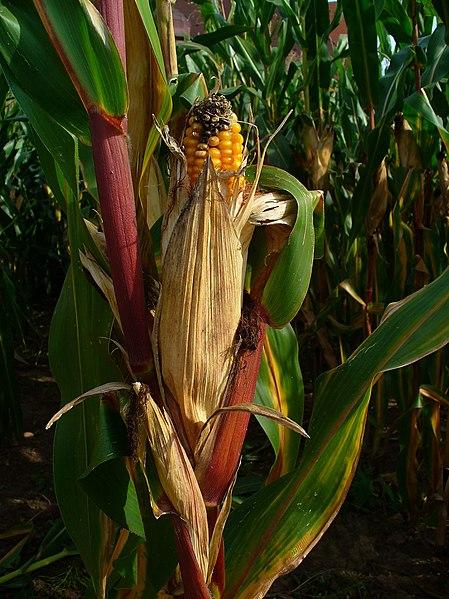
Photo credit : Photo by H. Zell without modification (CC BY-SA 3.0). License : CC BY-SA 3.0.