Helianthus annuus (Tournesol) : vertus médicinales en extraction alcoolique
Helianthus annuus (Tournesol) : vertus médicinales en extraction alcoolique
Helianthus annuus (Tournesol) — famille Asteracées.
Cette base documente les extractions alcooliques (éthanol) des substances actives. Notre monographie recense actuellement 19 indications en extraction alcoolique pour cette espèce. La monographie s’appuie sur 147 références scientifiques enregistrées pour l’espèce.
Indications thérapeutiques en extraction alcoolique :
Note : les extraits de références scientifiques sont conservés dans leur langue d’origine (le plus souvent l’anglais), sans traduction, afin de respecter le texte source des publications.
- Infection bacterienne : Partie usitée : Feuille. Profil pharmacologique documenté : Gentamycine-like.
Selon Al-Shamma LMJ (2010) : pathogenic bacteria was Isolated from Al_yarmok hospital Baghdad included Escherichia coli, Pseudomonas aeruginosa , Staphylococcus aureus, Klebsiella pneumoniae & Streptococcus pyogenes .Oil of Euroflor genotype had more inhibition on all pathogenic bacteria in all using different concentration . pneumoniae of concentration 50% of diameter inhibition15mm & diameter 8mm at concentration. Selon Aziz FM (2014) : The aim of the present study is to extract a polar oil from the seeds of Helianthus annuus & investigate its antimicrobial activity, using agar diffusion method against Staphylococcus aureus, Staphylococcus epidermidis, Pseudomonas aeruginosa, Escherichia coli, Proteus vulgaris & Candida albicans; also, determination of the presence of Zinc in the extract using flame atomic absorption technique & to assess clinical advantage of the extract prepared within selected formula in treating Napkin dermatitis. - État inflammatoire : Partie usitée : Feuille. Profil pharmacologique documenté : Indometacine-like.
Selon Auteur (2015) : Methods: The effect of HA was evaluated for chronic inflammation by complete Freund’s adjuvant (CFA) induced arthritis in rats. The serum marker of arthritis such as C-reactive protein (CRP) & Rheumatoid factor were also reduced in the HA-treated arthritic rats. Selon Ejebe ED (2010) : To investigate the anti-inflammatory & analgesic effects of the ethanol extract of leaves of Helianthus annuus in acclimatized Wistar rats. - Stress oxydatif : Partie usitée : Feuille. Profil pharmacologique documenté : Acide ascorbique-like.
Selon Lanzhou Li (2017) : The potential therapeutic effects of SHE on gout are probably due to the production of anti-inflammatory cytokines & the suppression of XO activity via the modulation of oxidative stress status. Selon Anushree S (2017) : For example, the oxidative stability index of commercially available Nutrisun at 110 °C is six times greater than that of regular sunflower oil. Second, high-stearic-high-oleic oils obtained from mutant and hybrid sunflower cultivars have higher oxidative stability index and therefore have better stability, quality, and functionality than regular sunflower oil.
D’autres indications (y compris d’autres modes d’extraction le cas échéant), posologies, précautions d’emploi et le détail des références scientifiques sont disponibles dans la fiche monographique complète.
Base médicinale Lapotitjéri di la Nati
Extraits éthanoliques des substances actives — monographies, indications, posologies et références pour professionnels de santé. Ethnopharmacologue Emmanuel Nossin.
→ Rechercher Helianthus annuus dans la base (abonnement requis)
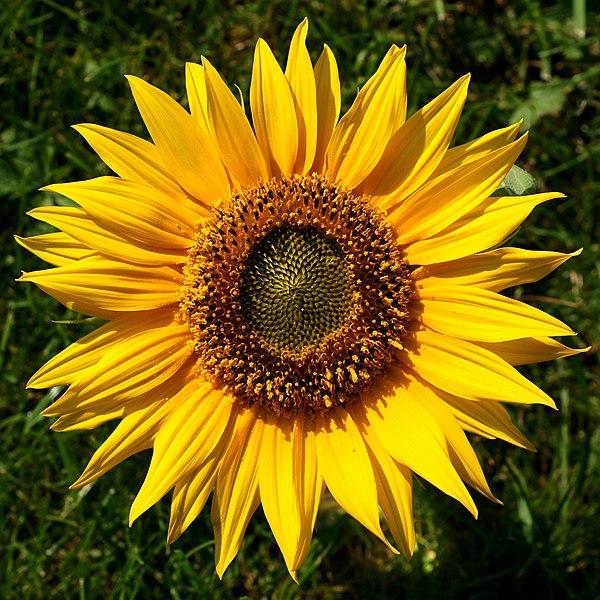
Crédit photo : Photo de Friedrich Böhringer sans modification (CC BY-SA 2.5). Licence : CC BY-SA 2.5.