Origanum vulgare (Origan) : vertus médicinales en extraction alcoolique
Origanum vulgare (Origan) : vertus médicinales en extraction alcoolique
Origanum vulgare (Origan) — famille Lamiacées.
Cette base documente les extractions alcooliques (éthanol) des substances actives. Notre monographie recense actuellement 7 indications en extraction alcoolique pour cette espèce. La monographie s’appuie sur 55 références scientifiques enregistrées pour l’espèce.
Indications thérapeutiques en extraction alcoolique :
Note : les extraits de références scientifiques sont conservés dans leur langue d’origine (le plus souvent l’anglais), sans traduction, afin de respecter le texte source des publications.
- Infection bacterienne : Partie usitée : Feuille. Profil pharmacologique documenté : Amphotericine-like, Pénicilline-like, Streptomycine-like.
Selon Liçina BZ (2013) : The strongest antibacterial activity, determined by microdilution method, was detected on G+ bacteria such as Bacillus species & Staphylococcus aureus, obtaining minimal inhibitory concentration (MIC) 0.16 mg/ml while antifungal activity was moderate with MICs between 2.5 & 20 mg/mL. The present work was undertaken to determine the total phenol, flavonoid & tannin content in five extracts of Origanum vulgare growing wild in southwest Serbia as well as to evaluate antioxidant & antimicrobial activity towards 29 strains of human pathogenic & food spoilage bacteria & fungi. Selon Puskarova A (2017) : The differences in the measured inhibition halos of OR (p = 0.000457), TY (p = 0.000457) & Lavandula angustifolia (LA; p = 0.0117) on Staphylococcus aureus were statistically different from the control. - État inflammatoire : Partie usitée : Feuille.
Selon De Santis F (2019) : Results showed that the capability to activate anti-microbial & anti-inflammatory response is shared by different fractions, suggesting that diverse bioactive molecules are present within the hydroalcoholic extract. Altogether, these results show that HyE-Ov promotes anti-mycobacterial innate immunity & limits inflammatory response in vitro & suggest that this plant extract may be exploitable as phytocomplex or nutraceutical for novel host-directed therapeutic approaches. Selon Mazzarello V (2020) : Conclusion: MOTC has shown, compared to Acnatac, to have anti-acne efficacy & to possess an anti-inflammatory activity, due to essential oils, able to reduce in vivo erythematous lesions & those induced by retinoids,. - Cancer : Partie usitée : Feuille.
Selon Russo R (2015) : A growing body of scientific reports has recently focused on the potential of essential oils as anticancer treatment in the attempt to overcome the development of multidrug resistance and important side effects associated with the antitumor drugs currently used. In this review we discuss the literature on the effects of essential oils in in vitro & in vivo models of cancer, focusing on the studies performed with the whole phytocomplex rather than single constituents. Selon Lesgards J.F (2014) : Many phenomena seem to occur, among which are as follows: overexpression & regulation of liver detoxification enzymes, changes in the membrane potential of cancer cells & mitochondria, production of free radicals in cancer cells, inhibition of angiogenesis, & modification of tumor-inducing genes.
D’autres indications (y compris d’autres modes d’extraction le cas échéant), posologies, précautions d’emploi et le détail des références scientifiques sont disponibles dans la fiche monographique complète.
Base médicinale Lapotitjéri di la Nati
Extraits éthanoliques des substances actives — monographies, indications, posologies et références pour professionnels de santé. Ethnopharmacologue Emmanuel Nossin.
→ Rechercher Origanum vulgare dans la base (abonnement requis)
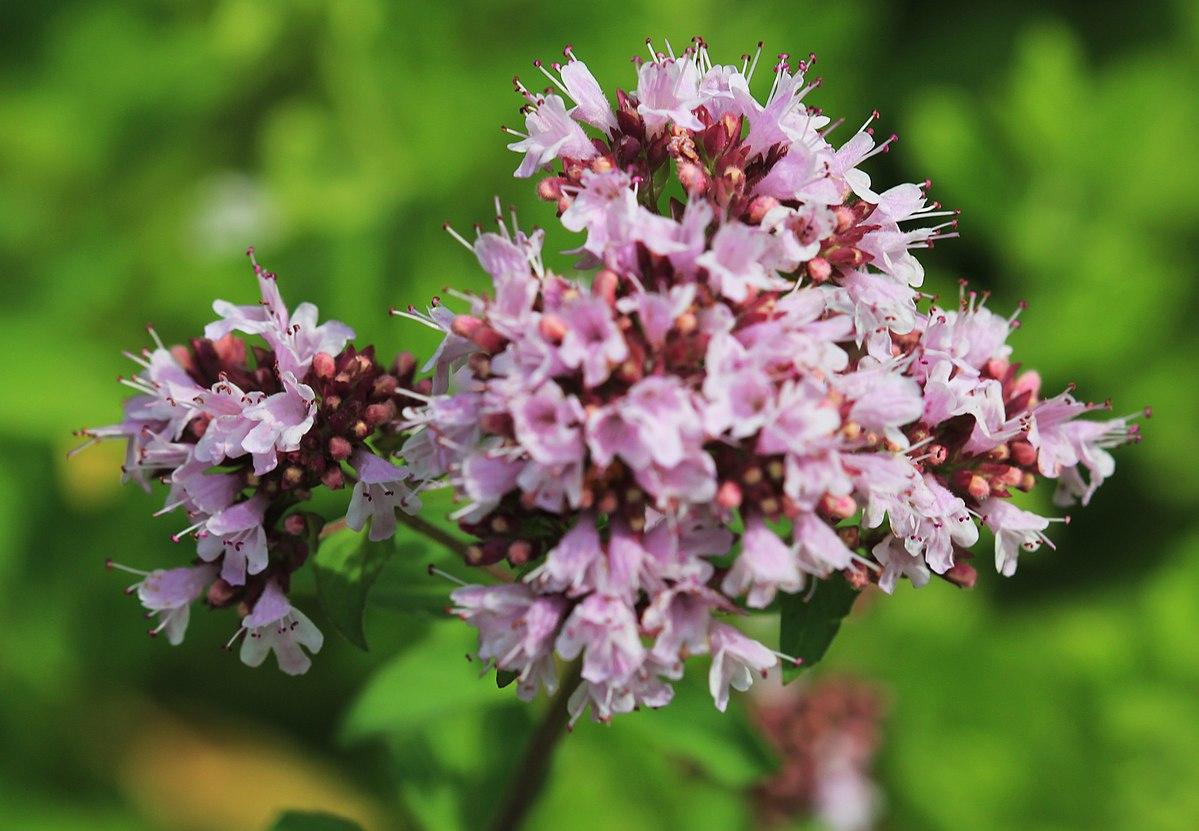
Crédit photo : Photograph de Karelj sans modification (CC0 1.0). Licence : CC0 1.0.