Raphanus sativus (Radi) : vertus médicinales en extraction alcoolique
Raphanus sativus (Radi) : vertus médicinales en extraction alcoolique
Raphanus sativus (Radi) — famille Brassicacées.
Sources externes reconnues associées à cette monographie : Pharmacopée française.
Cette base documente les extractions alcooliques (éthanol) des substances actives. Notre monographie recense actuellement 22 indications en extraction alcoolique pour cette espèce. La monographie s’appuie sur 123 références scientifiques enregistrées pour l’espèce.
Indications thérapeutiques en extraction alcoolique :
Note : les extraits de références scientifiques sont conservés dans leur langue d’origine (le plus souvent l’anglais), sans traduction, afin de respecter le texte source des publications.
- Diabète mellitus de type II (Cv : Partie usitée : Feuille. Profil pharmacologique documenté : Aminoguanidine-like.
Selon Elnour RO (2022) : Thyroid hormone increases metabolic actions in almost every tissue, & the current study was an attempt to evaluate scientifically the effects of Raphanus satives (Radish) in the treatment of diabetes mellitus.Objectives: The main objective of this study is to evaluate the hypoglycemic effect of Raphanus sativus (Radish) on induced hyperglycemic rats. Methods: An oral administration of ethanolic extract of RS in glucose loaded rats at dose of 250mg/k body weight, standard group was administered with 10mg/kg of hypoglycemic drug Glibenclamide for 2 consecutive weeks. Selon SAHA S (2025) : These findings suggest that RS leaf extract exerts antidiabetic effects through glucose regulation, oxidative stress reduction, & apoptosis inhibition, validating its therapeutic potential against type 2 diabetes mellitus. - Infection bactérienne : Partie usitée : Semence. Profil pharmacologique documenté : Chloramphénicol-like, Ciprofloxacine-like.
Selon Ahmad F (2012) : Objectives: The aim of the study is to test the potentiality of different solvent extracts (Ethanol, Methanol, Ethyl Acetate, Chloroform, Benzene, Aqueous hot & Aqueous cold) against various pathogenic bacterial strains E .coli (ATCC25922), Klebsiella pneumonia (ATCC-27736), Proteus vulgaris (AT CC – 6380), Pseudomonas aeruginosa (ATCC-27853), Staphylococcus aureus (ATCC-25923), Shigella sonnei (ATCC-25931), Salmonella typhi (ATCC-25241) & Salmonella paratyphi (ATCC-9150). The results suggest that ethanolic & methanolic extracts can be used in the treatment of infection caused by these bacterial strains used in this study. Selon -Ibrahim RM (2024) : -Ibrahim RM et al, Agro-byproduct valorization of radish & turnip leaves & roots as new sources of antibacterial & antivirulence agents through metabolomics & molecular networking. - Troubles hépatiques : Partie usitée : Feuille. Profil pharmacologique documenté : Silymarine-like.
Selon Anwar R (2006) : Paracetamol significantly increase the SGOT, SGPT, SLDH, SAP & serum total Bilirubin levels both in acute & chornic administration. Crude powder of RS also declined the SGOT, SGPT, SLDH, SAP & serum total bilirubin levels after the chornic administration of paracetamol. Selon Chaturvedi P (2007) : Degree of lipid peroxidation caused by paracetamol was measured in terms of thiobarbituric acid reactive substances (TBARS) & protection was measured in reference to serum glutamate oxaloacetate transaminase (SGOT), serum glutamate aspartate transaminase (SGPT), & blood & hepatic levels of antioxidants like glutathione & catalase.
D’autres indications (y compris d’autres modes d’extraction le cas échéant), posologies, précautions d’emploi et le détail des références scientifiques sont disponibles dans la fiche monographique complète.
Base médicinale Lapotitjéri di la Nati
Extraits éthanoliques des substances actives — monographies, indications, posologies et références pour professionnels de santé. Ethnopharmacologue Emmanuel Nossin.
→ Rechercher Raphanus sativus dans la base (abonnement requis)
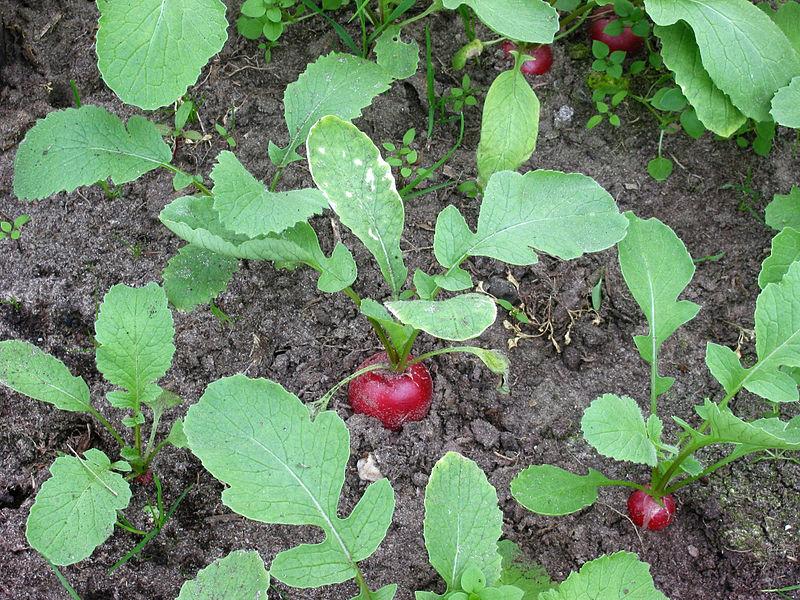
Crédit photo : Photo de Rasbak sans modification (CC BY-SA 3.0). Licence : CC BY-SA 3.0.