Syzygium aromaticum (Klou-Jiwôf) : vertus médicinales en extraction alcoolique
Syzygium aromaticum (Klou-Jiwôf) : vertus médicinales en extraction alcoolique
Syzygium aromaticum (Klou-Jiwôf) — famille Myrtacées.
Sources externes reconnues associées à cette monographie : TRAMIL et Pharmacopée française.
Cette base documente les extractions alcooliques (éthanol) des substances actives. Notre monographie recense actuellement 21 indications en extraction alcoolique pour cette espèce. La monographie s’appuie sur 144 références scientifiques enregistrées pour l’espèce.
Indications thérapeutiques en extraction alcoolique :
Note : les extraits de références scientifiques sont conservés dans leur langue d’origine (le plus souvent l’anglais), sans traduction, afin de respecter le texte source des publications.
- Infection bactérienne : Partie usitée : Fruit (bouton floral). Profil pharmacologique documenté : Colistine-like.
Selon Kalemba D (2003) : This paper reviews the Classical methods commonly used for the evaluation of essential oils antibacterial and antifungal activities. Factors influencing the in vitro antimicrobial activity of essential oils and the mechanisms of essential oils action on microorganisms are reported. Selon Khan R (2009) : ATCC strains of Streptococcus mutans, Staphylococcus aureus, Enterococcus faecalis, Streptococcus bovis, Pseudomonas aeruginosa, Salmonella typhimurium, Escherichia coli, Klebsiella pneumoniae & Candida albicans were also tested. - Helminthiase : Partie usitée : Parasiticide et vétérinaire. Profil pharmacologique documenté : Albendazole-like.
Selon Kumar C (2012) : Ethanol extract of fruit of Cuminum cyminum (EECC), aqueous extract of fruit of C cyminum (AECC), Ethanol extract of fruit of Foeniculum vulgare (EEFV), aqueous extract of fruit of F vulgare (AEFV) & Ethanol extract of flowering Bud of Eugenia Caryophyllus (EEEC), aqueous extract of flowering Bud of E Caryophyllus (AEEC) were taken up for in vitro studies on the Anthelmintic activity against Pheretima posthuma. The results obtained from study indicate towards anthelmintic activity, supporting folk used of all three plants compared with reference standard. Selon Li D (2023) : The results showed that ethanol extracts of star anise (Illicium verum), chaulmoogra (Hydnocarpus anthelmintic), motherwort (Leonurus artemisia), mandarin orange peel (citri reticulata Pericarpium, i.e., peel of Citrus reticulata fruit), & Stemona (Stemona sessilifolia) had good contact acaricidal activities of 100, 98, 94, 88 & 86%, respectively, whereas star anise & clove (Syzygium aromaticum) had good fumigant acaricidal activities of 98 & 96%, respectively. - Infection fongique : Partie usitée : Fruit (bouton floral). Profil pharmacologique documenté : Nystatine-like, Clotrimazole-like.
Selon Kalemba D (2003) : This paper reviews the Classical methods commonly used for the evaluation of essential oils antibacterial and antifungal activities. Factors influencing the in vitro antimicrobial activity of essential oils and the mechanisms of essential oils action on microorganisms are reported. Selon Al-Ebady ZH (2010) : The present study was designed to evaluate the inhibitory effects of three local plant ethanolic extracts (Cyperus rotundus, Eugenia Caryophyllus & Coriandrum sativum) against the growth of Candida albicans in culture media by using of agar well diffusion method.
D’autres indications (y compris d’autres modes d’extraction le cas échéant), posologies, précautions d’emploi et le détail des références scientifiques sont disponibles dans la fiche monographique complète.
Base médicinale Lapotitjéri di la Nati
Extraits éthanoliques des substances actives — monographies, indications, posologies et références pour professionnels de santé. Ethnopharmacologue Emmanuel Nossin.
→ Rechercher Syzygium aromaticum dans la base (abonnement requis)
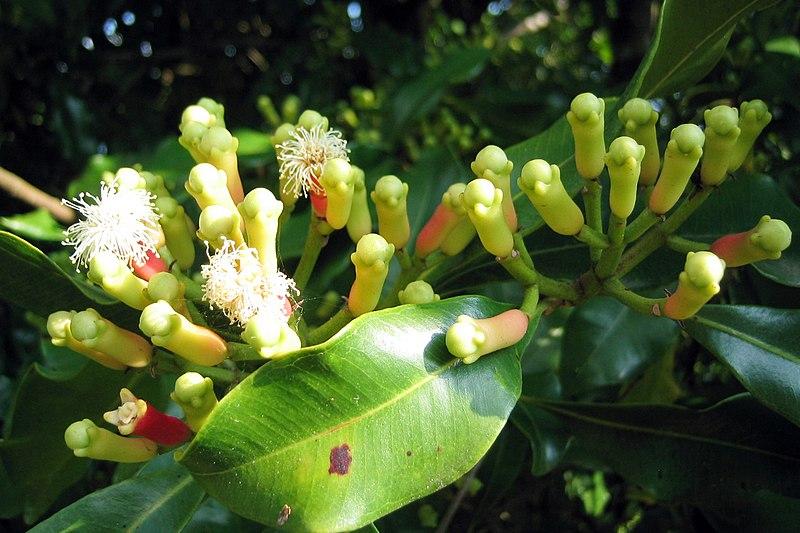
Crédit photo : Photo de Tino Frey sans modification (CC BY 4.0). Licence : CC BY 4.0.