Tillandsia recurvata (Bab-nèg) : vertus médicinales en extraction alcoolique
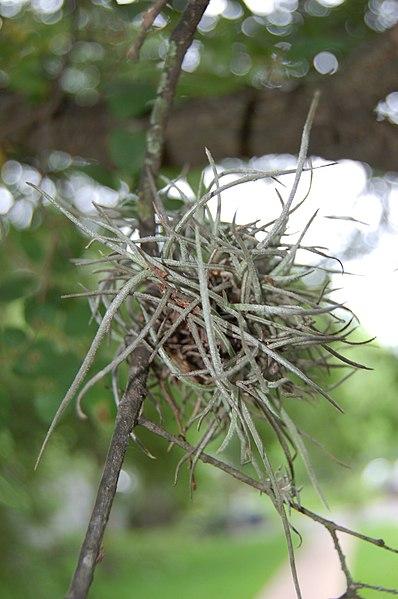
Tillandsia recurvata (Bab-nèg) : vertus médicinales en extraction alcoolique
Tillandsia recurvata (Bab-nèg) — famille Broméliacées.
Cette base documente les extractions alcooliques (éthanol) des substances actives. Notre monographie recense actuellement 4 indications en extraction alcoolique pour cette espèce. La monographie s’appuie sur 19 références scientifiques enregistrées pour l’espèce.
Indications thérapeutiques en extraction alcoolique :
Note : les extraits de références scientifiques sont conservés dans leur langue d’origine (le plus souvent l’anglais), sans traduction, afin de respecter le texte source des publications.
- Traitement adjuvant du pied diabétique : Partie usitée : Plante entière. Profil pharmacologique documenté : Neosporine-like.
Selon Bahado-Singh PlS (2014) : & GO in an excision wound model of normal & streptozotocin induced type I diabetic rats. One of the major challenges faced by people living with diabetes is the treatment and management of diabetic sores and ulcers. Selon Estrella-Parra E (2017) : have been reported with pharmacological actions, as anti-neoplasia, hypolipidemic, antifungal, anti-HSV-1, hypoglycemic & microbicide. - Traitement adjuvant du carcinome colorectal, mammaire, de la leucémie myéloïde aigue, du mélanome et glioblastome multiforme : Partie usitée : Plante entière.
Selon Lowe HI (2017) : Results: A flavonoid of the flavanone class was isolated from TR with potent anticancer activity. Despite significant efforts to discover and develop novel anticancer agents, many cancers remain in the unmet need category. Selon Lowe HI (2013) : A crude chloroform extract from Tillandsia recurvata was tested for activity against three human cancer cell lines including; A375 (human melanoma), MCF-7 (human breast) & PC-3 (human prostate cancer) using the WST-1 assay. - Cancer : Partie usitée : Plante entière.
Selon Lowe HI (2013) : A crude chloroform extract from Tillandsia recurvata was tested for activity against three human cancer cell lines including; A375 (human melanoma), MCF-7 (human breast) & PC-3 (human prostate cancer) using the WST-1 assay. IC50s obtained against these cell lines; A375, MCF-7 & PC-3 in the presence of the crude extract is; 0.9μg/ml, 40.51μg/ml & 5.97μg/ml respectively indicating the promising anti-cancer activity of the ball moss extract. Selon Auteur (2013) : A method of treating prostate cancer by administering a pharmaceutically-acceptable amount of a crude extract of the indigenous Jamaican plant Ball Moss (Tillandsia Recurvata) comprising one or more cycloartane isolates, & the isolates used in the method for eliciting thereby a kinase inhibitory response of prostate cancer cells by selectively inhibiting MRCKα kinase & angiogenesis of (growth of new blood vessels) to reduce the viability of prostate cancer cells.
D’autres indications (y compris d’autres modes d’extraction le cas échéant), posologies, précautions d’emploi et le détail des références scientifiques sont disponibles dans la fiche monographique complète.
Base médicinale Lapotitjéri di la Nati
Extraits éthanoliques des substances actives — monographies, indications, posologies et références pour professionnels de santé. Ethnopharmacologue Emmanuel Nossin.
→ Rechercher Tillandsia recurvata dans la base (abonnement requis)