Abelmoschus manihot (Chou-kanak) : vertus médicinales en extraction alcoolique
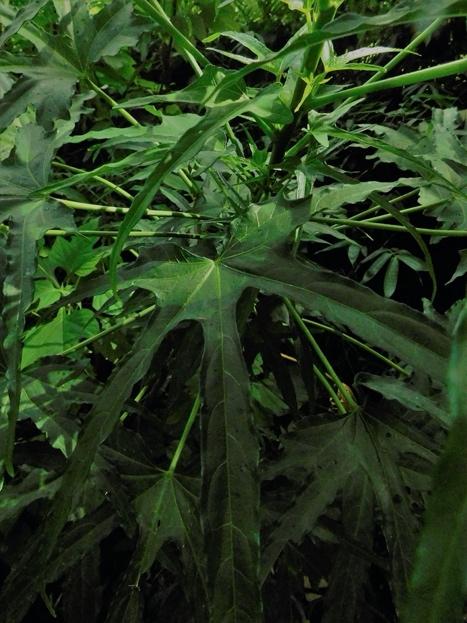
Abelmoschus manihot (Chou-kanak) : vertus médicinales en extraction alcoolique
Abelmoschus manihot (Chou-kanak) — famille Malvacées.
Cette base documente les extractions alcooliques (éthanol) des substances actives. Notre monographie recense actuellement 18 indications en extraction alcoolique pour cette espèce. La monographie s’appuie sur 108 références scientifiques enregistrées pour l’espèce.
Indications thérapeutiques en extraction alcoolique :
Note : les extraits de références scientifiques sont conservés dans leur langue d’origine (le plus souvent l’anglais), sans traduction, afin de respecter le texte source des publications.
- Troubles rénaux chroniques : Partie usitée : fleur. Profil pharmacologique documenté : Irbésartan-like, Losartan-like. Association synergique mentionnée : Losartan.
Selon Chen Y (2016) : manihot can ameliorate proteinuria, podocyte apoptosis, glomerulosclerosis & mesangial proliferation. Selon Li N (2019) : The possible mechanism of Huangkui capsule treatment in kidney diseases may include reducing inflammation & anti-oxidative stress, improving immune response, protecting renal tubular epithelial cells, ameliorating podocyte apoptosis, glomerulo-sclerosis & mesangial proliferation, as well as inhibiting renal fibrosis. Its efficacy in clinical symptoms is mainly improving renal function & reducing proteinuria among the patients with chronic kidney disease, diabetic kidney disease or IgA nephropathy. - Stress oxydatif : Partie usitée : fleur. Profil pharmacologique documenté : Acide ascorbique-like.
Selon Quia Y (2017) : These results suggest that TFAE protects mice against d-gal-induced oxidative stress & the effect is related to the activation of Nrf2 signaling. The effects of TFAE on antioxidative activities in a d-galactose (d-gal)-induced mouse model & Nrf2-mediated antioxidant responses were evaluated. Selon SU J (2025) : HKC treatment also significantly improved the renal & oxidative stress injuries in HG HK-2 cell model through the Nrf2 pathway in vitro. - Blessure, plaie infecte, brulure du second degré : Partie usitée : Feuille. Profil pharmacologique documenté : Sulfadiazine-like.
Selon Yuniarti WM (2020) : World Health Organization (WHO) estimated around 265000 of death is caused by burn injury. Conclusion: The skin evaluation that consists of density and arrangement of collagen & total of fibroblast shows that T3 is the best concentration of extract AM leaf that can be used as a topical therapy for burn injury. Selon Tang L (2017) : It is a normal & vital process in growth and development, as well as in wound healing & in the formation of granulation tissue.
D’autres indications (y compris d’autres modes d’extraction le cas échéant), posologies, précautions d’emploi et le détail des références scientifiques sont disponibles dans la fiche monographique complète.
Base médicinale Lapotitjéri di la Nati
Extraits éthanoliques des substances actives — monographies, indications, posologies et références pour professionnels de santé. Ethnopharmacologue Emmanuel Nossin.
→ Rechercher Abelmoschus manihot dans la base (abonnement requis)
Crédit photo : Photo de la Pharmacopée martiniquaise traditionnelle.