Abelmoschus manihot (Chou-kanak) : medicinal properties | Lapo
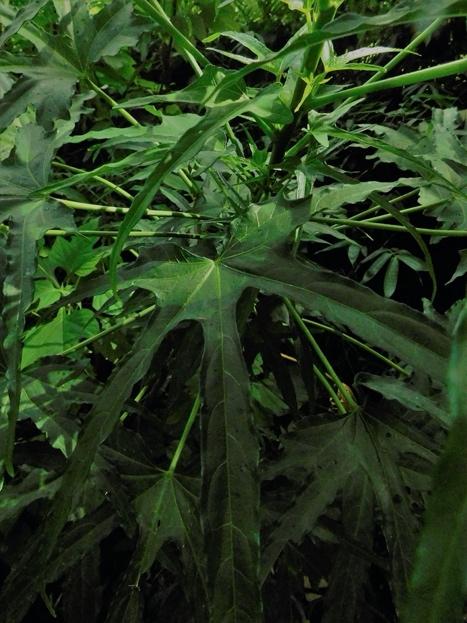
Abelmoschus manihot (Chou-kanak) : medicinal properties in alcoholic extraction
Abelmoschus manihot (Chou-kanak) — family Malvacées.
This database documents alcoholic (ethanol) extractions of active substances. Our monograph currently lists 18 indications in alcoholic extraction for this species. The monograph draws on 108 scientific references recorded for the species.
Therapeutic indications in alcoholic extraction:
Note: scientific reference excerpts are kept in their original language (most often English), without translation, to respect the source text of publications.
- Chronic kidney disorders : Plant part used: flower. Documented pharmacological profile: Irbésartan-like, Losartan-like. Mentioned synergistic association: Losartan.
According to Chen Y (2016): manihot can ameliorate proteinuria, podocyte apoptosis, glomerulosclerosis & mesangial proliferation. manihot) have been used in China for many centuries as a traditional Chinese medicine for the treatment of chronic kidney disease. According to Li N (2019): The possible mechanism of Huangkui capsule treatment in kidney diseases may include reducing inflammation & anti-oxidative stress, improving immune response, protecting renal tubular epithelial cells, ameliorating podocyte apoptosis, glomerulo-sclerosis & mesangial proliferation, as well as inhibiting renal fibrosis. - Oxidative stress : Plant part used: flower. Documented pharmacological profile: Acide ascorbique-like.
According to Quia Y (2017): These results suggest that TFAE protects mice against d-gal-induced oxidative stress & the effect is related to the activation of Nrf2 signaling. The effects of TFAE on antioxidative activities in a d-galactose (d-gal)-induced mouse model & Nrf2-mediated antioxidant responses were evaluated. According to SU J (2025): HKC treatment also significantly improved the renal & oxidative stress injuries in HG HK-2 cell model through the Nrf2 pathway in vitro. - Injury, infected wound, second-degree burn : Plant part used: Sheet. Documented pharmacological profile: Sulfadiazine-like.
According to Yuniarti WM (2020): World Health Organization (WHO) estimated around 265000 of death is caused by burn injury. Conclusion: The skin evaluation that consists of density and arrangement of collagen & total of fibroblast shows that T3 is the best concentration of extract AM leaf that can be used as a topical therapy for burn injury. According to Tang L (2017): It is a normal & vital process in growth and development, as well as in wound healing & in the formation of granulation tissue.
Further indications (including other extraction modes where applicable), dosages, precautions for use and full scientific references are available in the complete monograph.
Lapotitjéri di la Nati medicinal database
Ethanolic extracts of active substances — monographs, indications, dosages and references for healthcare professionals. Ethnopharmacologist Emmanuel Nossin.
→ Search Abelmoschus manihot in the database (subscription required)
Photo credit : Photo de la Pharmacopée martiniquaise traditionnelle.