Abrus precatorius (Grenn-réglis) : vertus médicinales en extraction alcoolique
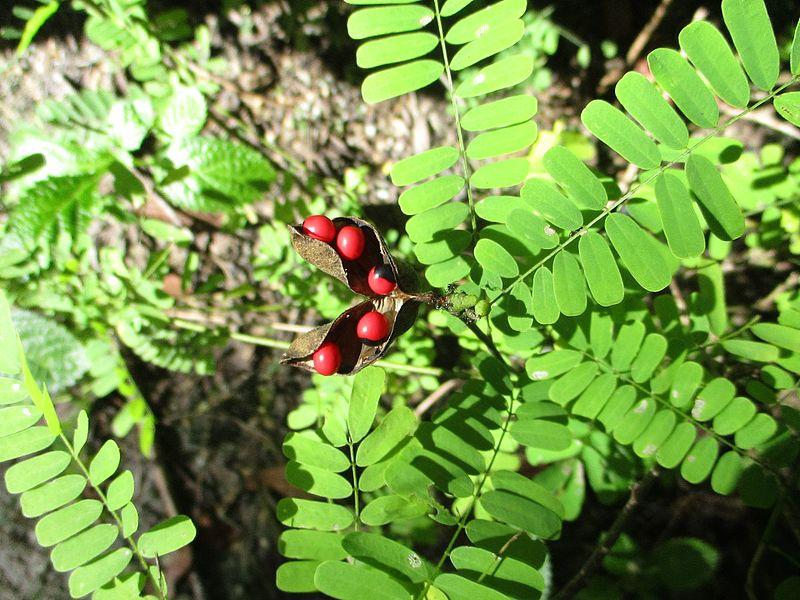
Abrus precatorius (Grenn-réglis) : vertus médicinales en extraction alcoolique
Abrus precatorius (Grenn-réglis) — famille Fabacées.
Sources externes reconnues associées à cette monographie : TRAMIL et Pharmacopée française.
Cette base documente les extractions alcooliques (éthanol) des substances actives. Notre monographie recense actuellement 10 indications en extraction alcoolique pour cette espèce. La monographie s’appuie sur 42 références scientifiques enregistrées pour l’espèce.
Indications thérapeutiques en extraction alcoolique :
Note : les extraits de références scientifiques sont conservés dans leur langue d’origine (le plus souvent l’anglais), sans traduction, afin de respecter le texte source des publications.
- Cancer : Partie usitée : Feuille. Profil pharmacologique documenté : Doxorubicine-like.
Selon Gul MZ (2013) : In addition, as a first step towards the identification of phytoconstituents endowed with potent chemopreventive activities, we evaluated the inhibitory effects of AP extracts on the proliferation of four different human tumour cell lines such as human colon adenocarcinoma cells (Colo-205), human retinoblastoma cancer cells (Y79), human hepatocellular carcinoma cells (HepG2) & Leukemia cells (SupT1). Furthermore, antiproliferative activities using different human cancer cell lines & primary cell line was carried out by MTT method. Selon Bhutia SK (2008) : Abrus agglutinin peptide fractions obtained from 10 kD molecular weight cut off membrane permeate (10 kMP), was shown to have selective antiproliferative activity on several tumor cell lines with induction of apoptosis through mitochondrial pathway. - Asthme, bronchospasme : Partie usitée : Feuille. Profil pharmacologique documenté : Salbutamol-like.
Selon Taur DJ (2017) : Methods :In present study ethanol extract of AP leaves was evaluated for antiasthmatic activity using carrageenan induced paw edema in rats [100–150 mg/kg], histamine induced bronchospasm in guinea pig [200–400 mg/kg] & histamine induced contraction of goat tracheal chain [2.5–25 μg/ml]. The leaves & roots are sweet in taste & traditionally used for the treatment of asthma, bronchititis, & inflammation. Selon Mensah AY (2011) : The results revealed that the methanolic extract produced dose-dependent bronchodilator activity, thus justifying to some extent the traditional use of the plant AP in asthma,. - Alopécie androgénique : Partie usitée : semence. Profil pharmacologique documenté : Finasteride-like.
Selon UPADHYAY (2012) : Animals of Group 2, 3 and 4 who were treated with finasteride, petroleum ether & ethanolic extract of seed respectively topically along with testosterone (i.m.) did not developed alopecia. precatorius seeds are evaluated for reversal of androgen (testosterone by i.m route) induced alopecia in male albino Wistar rats and compared to topical administration of standard antiandrogenic drug finasteride for 21 days.
D’autres indications (y compris d’autres modes d’extraction le cas échéant), posologies, précautions d’emploi et le détail des références scientifiques sont disponibles dans la fiche monographique complète.
Base médicinale Lapotitjéri di la Nati
Extraits éthanoliques des substances actives — monographies, indications, posologies et références pour professionnels de santé. Ethnopharmacologue Emmanuel Nossin.
→ Rechercher Abrus precatorius dans la base (abonnement requis)
Crédit photo : Photo de David E Mead sans modification (CC0 1.0). Licence : CC0 1.0.