Abrus precatorius (Grenn-réglis) : medicinal properties | Lapo
Abrus precatorius (Grenn-réglis) : medicinal properties in alcoholic extraction
Abrus precatorius (Grenn-réglis) — family Fabacées.
Recognised external sources linked to this monograph: TRAMIL and French Pharmacopoeia.
This database documents alcoholic (ethanol) extractions of active substances. Our monograph currently lists 10 indications in alcoholic extraction for this species. The monograph draws on 42 scientific references recorded for the species.
Therapeutic indications in alcoholic extraction:
Note: scientific reference excerpts are kept in their original language (most often English), without translation, to respect the source text of publications.
- Cancer : Plant part used: Sheet. Documented pharmacological profile: Doxorubicine-like.
According to Gul MZ (2013): In addition, as a first step towards the identification of phytoconstituents endowed with potent chemopreventive activities, we evaluated the inhibitory effects of AP extracts on the proliferation of four different human tumour cell lines such as human colon adenocarcinoma cells (Colo-205), human retinoblastoma cancer cells (Y79), human hepatocellular carcinoma cells (HepG2) & Leukemia cells (SupT1). Furthermore, antiproliferative activities using different human cancer cell lines & primary cell line was carried out by MTT method. According to Bhutia SK (2008): Abrus agglutinin peptide fractions obtained from 10 kD molecular weight cut off membrane permeate (10 kMP), was shown to have selective antiproliferative activity on several tumor cell lines with induction of apoptosis through mitochondrial pathway. - Asthma, bronchospasm : Plant part used: Sheet. Documented pharmacological profile: Salbutamol-like.
According to Taur DJ (2017): Methods :In present study ethanol extract of AP leaves was evaluated for antiasthmatic activity using carrageenan induced paw edema in rats [100–150 mg/kg], histamine induced bronchospasm in guinea pig [200–400 mg/kg] & histamine induced contraction of goat tracheal chain [2.5–25 μg/ml]. The leaves & roots are sweet in taste & traditionally used for the treatment of asthma, bronchititis, & inflammation. According to Mensah AY (2011): The results revealed that the methanolic extract produced dose-dependent bronchodilator activity, thus justifying to some extent the traditional use of the plant AP in asthma,. - Androgenetic alopecia : Plant part used: seed. Documented pharmacological profile: Finasteride-like.
According to UPADHYAY (2012): Animals of Group 2, 3 and 4 who were treated with finasteride, petroleum ether & ethanolic extract of seed respectively topically along with testosterone (i.m.) did not developed alopecia. precatorius seeds are evaluated for reversal of androgen (testosterone by i.m route) induced alopecia in male albino Wistar rats and compared to topical administration of standard antiandrogenic drug finasteride for 21 days.
Further indications (including other extraction modes where applicable), dosages, precautions for use and full scientific references are available in the complete monograph.
Lapotitjéri di la Nati medicinal database
Ethanolic extracts of active substances — monographs, indications, dosages and references for healthcare professionals. Ethnopharmacologist Emmanuel Nossin.
→ Search Abrus precatorius in the database (subscription required)
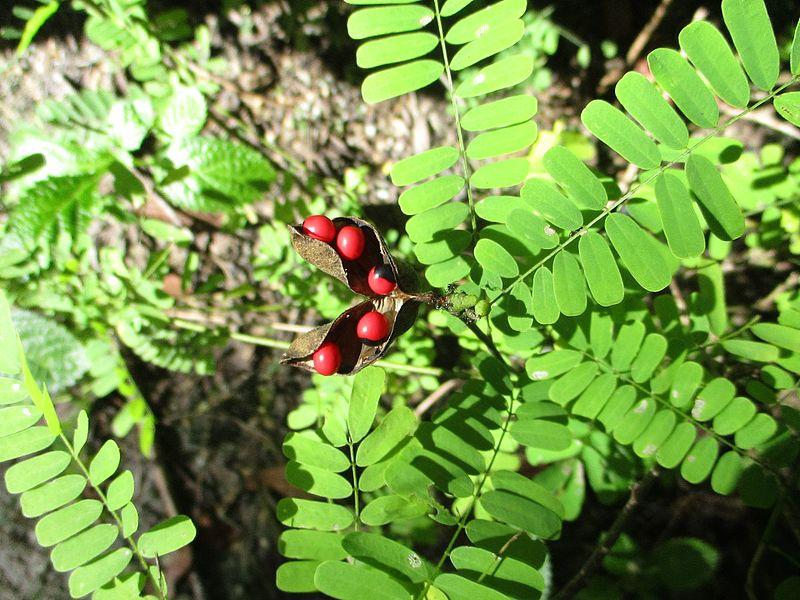
Photo credit : Photo de David E Mead sans modification (CC0 1.0). License : CC0 1.0.