Acalypha wilkesiana (Jipon-kankan) : vertus médicinales en extraction alcoolique
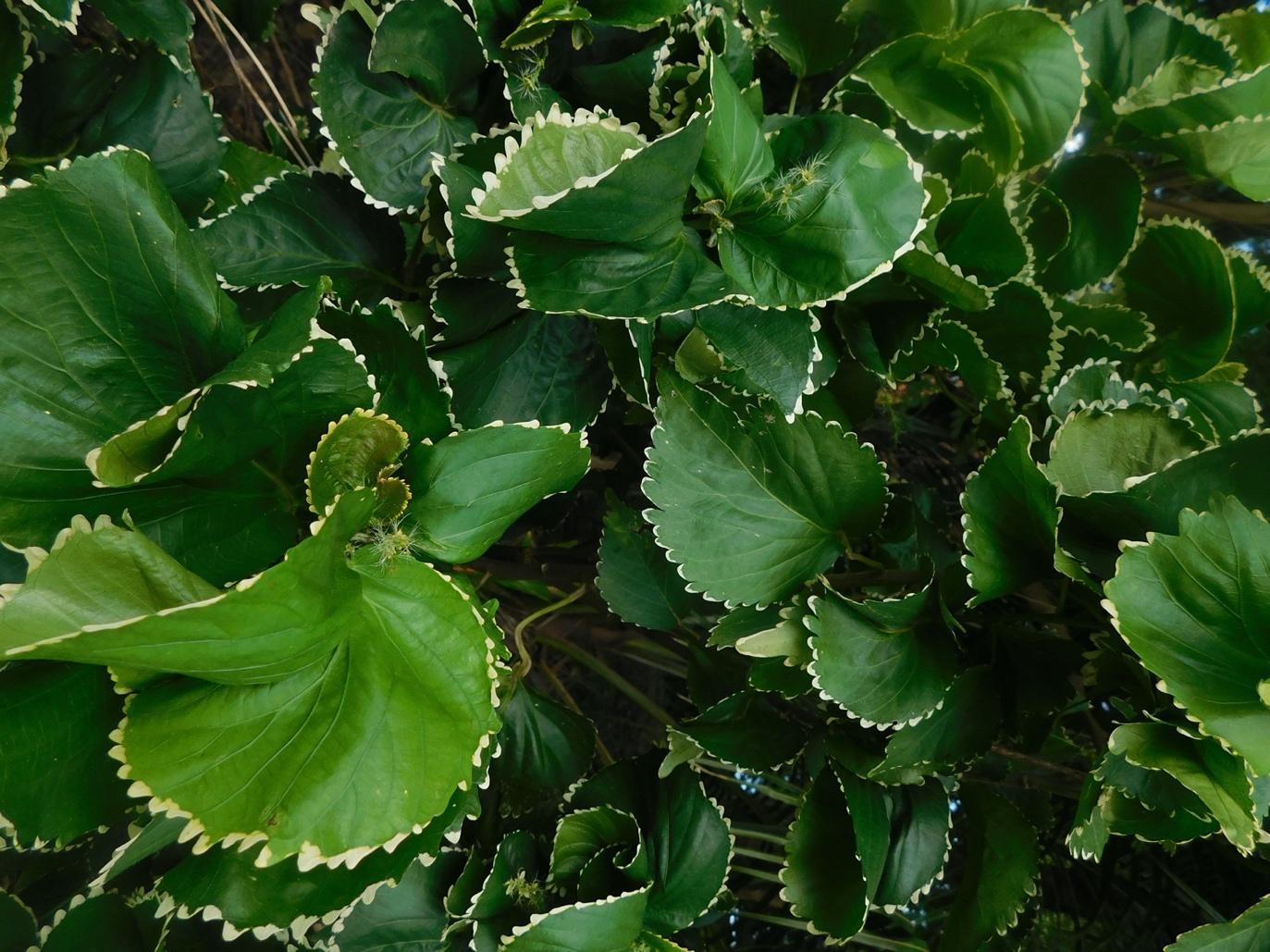
Acalypha wilkesiana (Jipon-kankan) : vertus médicinales en extraction alcoolique
Acalypha wilkesiana (Jipon-kankan) — famille Euphorbiacées.
Cette base documente les extractions alcooliques (éthanol) des substances actives. Notre monographie recense actuellement 17 indications en extraction alcoolique pour cette espèce. La monographie s’appuie sur 32 références scientifiques enregistrées pour l’espèce.
Indications thérapeutiques en extraction alcoolique :
Note : les extraits de références scientifiques sont conservés dans leur langue d’origine (le plus souvent l’anglais), sans traduction, afin de respecter le texte source des publications.
- Infection fongique : Partie usitée : parties aériennes. Profil pharmacologique documenté : Clotrimazole-like (Crème).
Selon Fawehinmi AB (2019) : The antifungal results are in the increasing order Microsporum audounii = Epidermophyton floccosum < M. furfur < Trichophyton mentagrophytes. Selon AZUBUIKE CP (2013) : wilkesiana has both antibacterial & anticandidal activity & also has high potential as antimicrobial agent when formulated as ointment topical use. - Infection bacterienne : Partie usitée : parties aériennes.
Selon AZUBUIKE CP (2013) : The MIC values of the extract against Escherichia coli, Staphylococcus aureus, Pseudomonas aeruginosa & Candida albicans were 5.00, 1.25, 10.00 & 5.00 mg/ml respectively. The zones of inhibition (mm) of the extract on the growth of the microorganisms were Escherichia coli (25.2 ± 1.0), Staphylococcus aureus (28.1 ± 0.5), Pseudomonas aeruginosa (32.4 ± 0.4) & Candida albicans (22.4 ± 1.3) but there was no zone of inhibition for Aspergillus flavus & Penicillium notatum. Selon Awe FA (s.d.) : The identified bacterial pathogen includes Streptococcus sp, Bacillus Cereus, Klebsiella sp, Enterobacter aerogenes and Escherichia coli. - Infection du poisson-chat (Clarias gariepinus) : Partie usitée : Feuille. Profil pharmacologique documenté : Gentamycine-like.
Selon Awe FA (s.d.) : The identified bacterial pathogen includes Streptococcus sp, Bacillus Cereus, Klebsiella sp, Enterobacter aerogenes and Escherichia coli. The leaves of these plants have inhibitory action on isolated bacteria & can be used to treat bacterial fin-rot of infected catfish Clarias gariepinus. Selon AZUBUIKE CP (2013) : The preliminary in vitro antimicrobial activity of the extract at concentrations of 2.5 mg/ml, 5 mg/ml and 10 mg/ml and those of the ointments was determined against Escherichia coli, Staphylococcus aureus, Pseudomonas aeruginosa, Candida albicans, Aspergillus flavus & Penicillium notatum using the agar cup plate method.
D’autres indications (y compris d’autres modes d’extraction le cas échéant), posologies, précautions d’emploi et le détail des références scientifiques sont disponibles dans la fiche monographique complète.
Base médicinale Lapotitjéri di la Nati
Extraits éthanoliques des substances actives — monographies, indications, posologies et références pour professionnels de santé. Ethnopharmacologue Emmanuel Nossin.
→ Rechercher Acalypha wilkesiana dans la base (abonnement requis)
Crédit photo : Photo de Krzysztof Ziarnek, Kenraiz sans modification (CC BY 4.0). Licence : CC BY 4.0.