Anacardium occidentale (Nwa-kajou) : vertus médicinales en extraction alcoolique
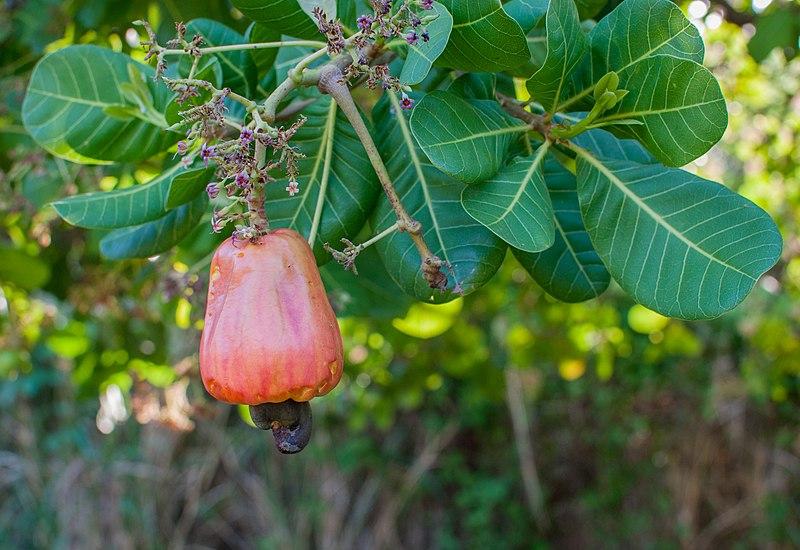
Anacardium occidentale (Nwa-kajou) : vertus médicinales en extraction alcoolique
Anacardium occidentale (Nwa-kajou) — famille Anacardiacées.
Sources externes reconnues associées à cette monographie : TRAMIL.
Cette base documente les extractions alcooliques (éthanol) des substances actives. Notre monographie recense actuellement 22 indications en extraction alcoolique pour cette espèce. La monographie s’appuie sur 82 références scientifiques enregistrées pour l’espèce.
Indications thérapeutiques en extraction alcoolique :
Note : les extraits de références scientifiques sont conservés dans leur langue d’origine (le plus souvent l’anglais), sans traduction, afin de respecter le texte source des publications.
- Infection bactérienne : Partie usitée : FRUIT (NOIX). Profil pharmacologique documenté : Ciprofloxacine-like.
Selon Belonwu DC (2014) : Evaluation of antibacterial activity of different parts of two varieties of Anacardium occidentale{red fruited variety (RFV) & yellow fruited variety (YFV)}, namely, the fruit, leaf, stem bark & root extracts on human pathogens (Staphylococcus aureus, Escherichia coli, Pseudomonas aeruginosa, Salmonella typhi, Proteus mirabilis & Klebsiella spp) was carried out in vitro. aeruginosa & Klebsiella spp were inhibited by ethanolic red fruit extract in the following corresponding order: E. Selon Da Silva R.A (2016) : The minimum bactericidal and fungicidal concentrations were determined against: Streptococcus mutans, Lactobacillus acidophilus, Staphylococcus aureus, MRSA, Enterococcus faecalis, Streptococcus pyogenes, Pseudomonas aeruginosa, Proteus mirabilis, Escherichia coli, Klebsiella pneumoniae, Helicobacter Pylori, Salmonella choleraesuis, Candida albicans, & Candida tropicalis. - Troubles neurodégénératifs (Taupathies) : Partie usitée : ÉCORCE DE TIGE.
Selon Junsatrhian P (2018) : Polyphenols present in plant-diets as natural antioxidant substances play important roles in prevention of Alzheimer's disease associated with deposits of amyloid beta (Aβ) peptide. The results conclude that AO contains some antioxidant compounds that can potentially be used to treat neurodegenerative diseases as well as other plants. Selon Encarnação S (2022) : Gallic acid was identified as the major alpha- & beta-glucosidase inhibitor. - Diabète mellitus de type 2 : Partie usitée : Feuille. Profil pharmacologique documenté : Diabenese-like, Pioglitazone-like, Glibenclamide-like.
Selon JAISWAL YS (2016) : The aim of the current study was to investigate the antidiabetic effects of ethanol extract of leaves of AO on neonatal streptozotocin diabetic rats. We demonstrated the antidiabetic potential of the plant extracts in n-streptozotocin diabetic rats. Selon Dahake AP (2009) : The investigation was carried out to study the Antihyperglycemic effects of ethanolic extract of Anacardium occidentale leaves in normal, glucose loaded & alloxan induced diabetic rats.
D’autres indications (y compris d’autres modes d’extraction le cas échéant), posologies, précautions d’emploi et le détail des références scientifiques sont disponibles dans la fiche monographique complète.
Base médicinale Lapotitjéri di la Nati
Extraits éthanoliques des substances actives — monographies, indications, posologies et références pour professionnels de santé. Ethnopharmacologue Emmanuel Nossin.
→ Rechercher Anacardium occidentale dans la base (abonnement requis)
Crédit photo : Photo de Wilfredor sans modification (CC BY-SA 4.0). Licence : CC BY-SA 4.0.