Anacardium occidentale (Nwa-kajou) : medicinal properties | Lapo
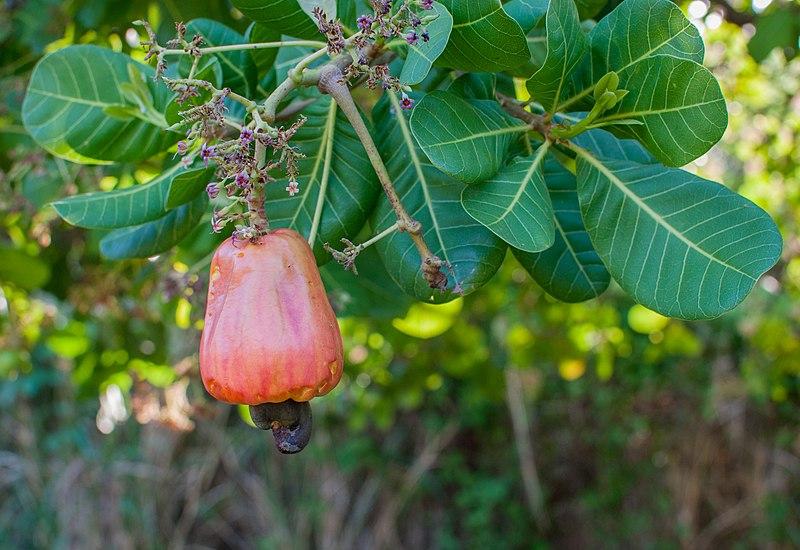
Anacardium occidentale (Nwa-kajou) : medicinal properties in alcoholic extraction
Anacardium occidentale (Nwa-kajou) — family Anacardiacées.
Recognised external sources linked to this monograph: TRAMIL.
This database documents alcoholic (ethanol) extractions of active substances. Our monograph currently lists 22 indications in alcoholic extraction for this species. The monograph draws on 82 scientific references recorded for the species.
Therapeutic indications in alcoholic extraction:
Note: scientific reference excerpts are kept in their original language (most often English), without translation, to respect the source text of publications.
- Bacterial infection : Plant part used: FRUIT (NUT). Documented pharmacological profile: Ciprofloxacine-like.
According to Belonwu DC (2014): Evaluation of antibacterial activity of different parts of two varieties of Anacardium occidentale{red fruited variety (RFV) & yellow fruited variety (YFV)}, namely, the fruit, leaf, stem bark & root extracts on human pathogens (Staphylococcus aureus, Escherichia coli, Pseudomonas aeruginosa, Salmonella typhi, Proteus mirabilis & Klebsiella spp) was carried out in vitro. aeruginosa & Klebsiella spp were inhibited by ethanolic red fruit extract in the following corresponding order: E. According to Da Silva R.A (2016): The minimum bactericidal and fungicidal concentrations were determined against: Streptococcus mutans, Lactobacillus acidophilus, Staphylococcus aureus, MRSA, Enterococcus faecalis, Streptococcus pyogenes, Pseudomonas aeruginosa, Proteus mirabilis, Escherichia coli, Klebsiella pneumoniae, Helicobacter Pylori, Salmonella choleraesuis, Candida albicans, & Candida tropicalis. - Neurodegenerative disorders (taupathies) : Plant part used: STEM BARK.
According to Junsatrhian P (2018): Polyphenols present in plant-diets as natural antioxidant substances play important roles in prevention of Alzheimer's disease associated with deposits of amyloid beta (Aβ) peptide. The results conclude that AO contains some antioxidant compounds that can potentially be used to treat neurodegenerative diseases as well as other plants. According to Encarnação S (2022): Gallic acid was identified as the major alpha- & beta-glucosidase inhibitor. - Type 2 diabetes mellitus : Plant part used: Sheet. Documented pharmacological profile: Diabenese-like, Pioglitazone-like, Glibenclamide-like.
According to JAISWAL YS (2016): The aim of the current study was to investigate the antidiabetic effects of ethanol extract of leaves of AO on neonatal streptozotocin diabetic rats. We demonstrated the antidiabetic potential of the plant extracts in n-streptozotocin diabetic rats. According to Dahake AP (2009): The investigation was carried out to study the Antihyperglycemic effects of ethanolic extract of Anacardium occidentale leaves in normal, glucose loaded & alloxan induced diabetic rats.
Further indications (including other extraction modes where applicable), dosages, precautions for use and full scientific references are available in the complete monograph.
Lapotitjéri di la Nati medicinal database
Ethanolic extracts of active substances — monographs, indications, dosages and references for healthcare professionals. Ethnopharmacologist Emmanuel Nossin.
→ Search Anacardium occidentale in the database (subscription required)
Photo credit : Photo by Wilfredor without modification (CC BY-SA 4.0). License : CC BY-SA 4.0.