Cajanus cajan (Pwa dangôl) : vertus médicinales en extraction alcoolique
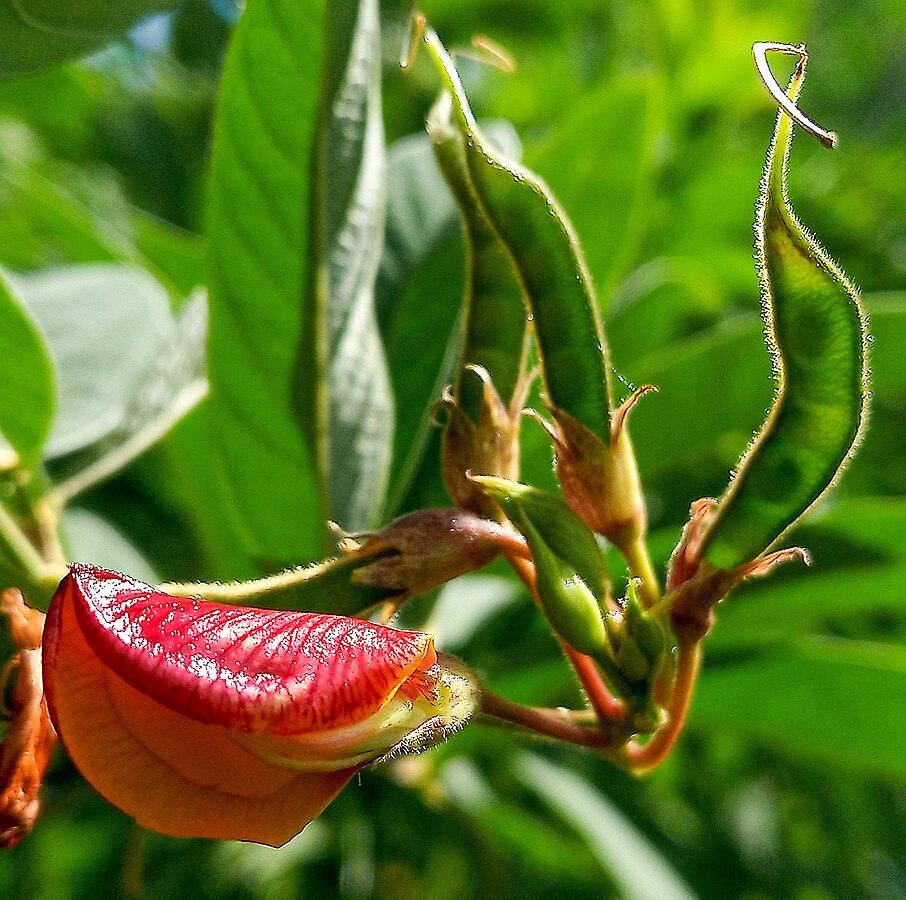
Cajanus cajan (Pwa dangôl) : vertus médicinales en extraction alcoolique
Cajanus cajan (Pwa dangôl) — famille Fabacées.
Sources externes reconnues associées à cette monographie : TRAMIL.
Cette base documente les extractions alcooliques (éthanol) des substances actives. Notre monographie recense actuellement 17 indications en extraction alcoolique pour cette espèce. La monographie s’appuie sur 47 références scientifiques enregistrées pour l’espèce.
Indications thérapeutiques en extraction alcoolique :
Note : les extraits de références scientifiques sont conservés dans leur langue d’origine (le plus souvent l’anglais), sans traduction, afin de respecter le texte source des publications.
- Infection bactérienne : Partie usitée : Feuille. Profil pharmacologique documenté : Streptomycine-like.
Selon Pratima H (2011) : were extracted in various organic solvents such as pet ether, chloroform, methanol, ethanol & aqueous & were tested against Bacillus subtilis, staphylococcus aureus, Streptococcus pneumonia, Salmonella typhi, Klebsiella pneumoniae, Escherichia coli, & Pseudomonas aeruginosa using agar well diffusion method. The ethanolic extract showed the highest activity on all the Gram-positive bacteria & Gram-negative bacteria Klebsiella pneumonia at 100mg/mL, whereas Pseudomonas aeruginosa was resistant to all the extracts except ethanol. Selon Hasan SF (2013) : leaf on gram positive Bacillus spp. - Cancer : Partie usitée : Racine. Association synergique mentionnée : Cisplatine, Taxol.
Selon THI VO TL (1995) : The aim of this study was to investigate the anti-proliferative & anti-metastatic effects of sub-fractions (EECRpw, EECRp25, EECRp50, EECRp70, & EECRp95) containing 95% ethanol extract from CR (EECR95) in oral squamous cell carcinoma cells (SCC25). Moreover, EECRp70 in combination with a cancer chemotherapeutic agent (cisplatin or Taxol) also blocked cell proliferation, arrested cell cycle in subG1 phase, inhibited intracellular production of reactive oxygen species, & reduced migration & invasion of SCC25 cells. Selon HEMALATHA K (s.d.) : To Scientifically validate the tumor inhibitory potential of Cajanus cajan leaves, the present study utilized the 7,12-dimethylbenz(a)anthracene (DMBA)-induced hamster buccal pouch carcinogenesis as an experimental oral cancer model. - Malaria : Partie usitée : Feuille. Profil pharmacologique documenté : Chloroquine-like. Association synergique mentionnée : association synergique avec AZADIRACHTA INDICA-A JUSS (Feuille), Crescentia cujete-écorce de tige, Lawsonia inermis-feuille.
Selon Auteur (2017) : Plasmodium berghei infected mice were screened for parasitemia & administered with water & ethanol extracts of the combined plant sample. (stem bark), Olax subscorpioidea Oliv (root), and Terminalia glaucescens Planch ex Benth (stem bark and root) are combined for use in the treatment of malaria in Akure, Southwestern Nigeria.
D’autres indications (y compris d’autres modes d’extraction le cas échéant), posologies, précautions d’emploi et le détail des références scientifiques sont disponibles dans la fiche monographique complète.
Base médicinale Lapotitjéri di la Nati
Extraits éthanoliques des substances actives — monographies, indications, posologies et références pour professionnels de santé. Ethnopharmacologue Emmanuel Nossin.
Crédit photo : Photo de Filo gèn' sans modification (CC BY 4.0). Licence : CC BY 4.0.