Carica papaya (Papay) : vertus médicinales en extraction alcoolique
Carica papaya (Papay) : vertus médicinales en extraction alcoolique
Carica papaya (Papay) — famille Caricacées.
Sources externes reconnues associées à cette monographie : TRAMIL et Pharmacopée française.
Cette base documente les extractions alcooliques (éthanol) des substances actives. Notre monographie recense actuellement 48 indications en extraction alcoolique pour cette espèce. La monographie s’appuie sur 199 références scientifiques enregistrées pour l’espèce.
Indications thérapeutiques en extraction alcoolique :
Note : les extraits de références scientifiques sont conservés dans leur langue d’origine (le plus souvent l’anglais), sans traduction, afin de respecter le texte source des publications.
- Infection bacterienne : Partie usitée : Feuille. Profil pharmacologique documenté : Tetracycline-like.
Selon Yahaya A (2017) : The aqueous & ethanol extracts from the leaves & stem back of these plants were tested using well Diffusion method for their antimicrobial activity against some members of Enterobacteriales family isolated from diarrheic stool sample (Escherichia coli, Shigella spp, Salmonella typhi & Pseudomonas aeruginosa). Statistical analysis of the result shows that both the extracts demonstrated higher activities against bacteria tested, with the average zone of inhibition of 15.44mm, 14.78mm, 12.92mm & 11.31mm for Shigella, Escherichia coli, Salmonella typhi & Pseudomonas aeruginosa respectively. Selon Orhue PO (2013) : Extracts in 1% HCl & ethanol however, showed antimicrobial activity against the gram positive & negative organisms investigated, while extracts in water was only active against Escherichia coli & S. - Diabète mellitus de type II : Partie usitée : Feuille. Profil pharmacologique documenté : Metformine-like, Glibenclamide-like. Association synergique mentionnée : Metformine.
Selon ROY JR (2023) : Regardless of socioeconomic or demographic background, the prevalence of type 2 diabetes mellitus, which affects more than half a billion people worldwide, has been steadily increasing over time. The gluconeogenic enzymes, glycolytic enzymes, hepatic glycogen tissue concentration, oxidative stress markers, enzymatic antioxidants, protein expression of IRS-2, PI3K, SREBP-1C, & GLUT-2 were evaluated in the liver tissues of high-fat-diet streptozotocin-induced type 2 diabetic rats using q-RT-PCR as well as immuno-histochemistry & histopathology. Selon Haruna M (2022) : This study aims to evaluate the phytochemical, toxicity profile, antidiabetic & antihyperlipidemic effects of ethanolic fruit peel extract of Carica papaya in alloxan-induced diabetic rats. - Helminthiase : Partie usitée : Semence. Profil pharmacologique documenté : Lévamisole-like.
Selon Maroquin-Tun M (2018) : The eggs & L were pretreated with hydroalcoholic & ethanolic extract of papaya seed (2.5 mg/ml), distilled water, ethanol 90%, & Lévamisole (7.5 mg/ml). contortus, a strain isolated & maintained in the facilities. Selon KUMARI K (2017) : The present article illustrates the Anthelmintic activity of crude ethanolic extracts of A.
D’autres indications (y compris d’autres modes d’extraction le cas échéant), posologies, précautions d’emploi et le détail des références scientifiques sont disponibles dans la fiche monographique complète.
Base médicinale Lapotitjéri di la Nati
Extraits éthanoliques des substances actives — monographies, indications, posologies et références pour professionnels de santé. Ethnopharmacologue Emmanuel Nossin.
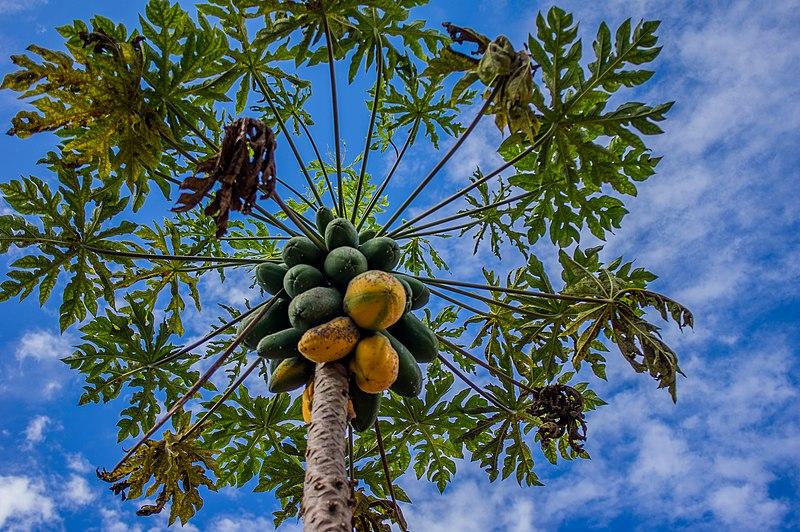
Crédit photo : Photo de Zezinho68 sans modification (CC BY-SA 4.0). Licence : CC BY-SA 4.0.