Cuminum cyminum (Kontoumili) : vertus médicinales en extraction alcoolique
Cuminum cyminum (Kontoumili) : vertus médicinales en extraction alcoolique
Cuminum cyminum (Kontoumili) — famille Apiacées.
Sources externes reconnues associées à cette monographie : Pharmacopée française.
Cette base documente les extractions alcooliques (éthanol) des substances actives. Notre monographie recense actuellement 15 indications en extraction alcoolique pour cette espèce. La monographie s’appuie sur 63 références scientifiques enregistrées pour l’espèce.
Indications thérapeutiques en extraction alcoolique :
Note : les extraits de références scientifiques sont conservés dans leur langue d’origine (le plus souvent l’anglais), sans traduction, afin de respecter le texte source des publications.
- Immunodeficience : Partie usitée : Semence. Profil pharmacologique documenté : Septiline-like. Association synergique mentionnée : Brassica nigra-semence.
Selon Nandini1 T (s.d.) : The aim of the Present investigation is to assess the immunomodulatory effects of ethanolic extract of Brassica nigra in combination with Cuminum cyminum against pyrogallol induced immunosuppression in rats. In another set of experiment the immunomodulatory activity of B nigra 250 & 500 mg/kg p.o. Selon Hasson SS (2019) : Conclusion: Combination of the four ethanolic herbal extracts (MCNF) is a promising medicament with a potential therapeutic value in stimulating the suppressed or weakened immune responses in laboratory animals & may act as a potential immunomodulatory agent to enhance both cellular & humoral immunity. - État inflammatoire : Partie usitée : Semence. Profil pharmacologique documenté : Aspirine-like.
Selon BHAT S (2014) : Both the aqueous & ethanolic extracts showed significant anti-inflammatory activity in Carrageenan-induced paw oedema & Cotton-pellet granuloma models when compared to the control group. cyminum seeds show predominantly anti-inflammatory activity while the ethanolic extracts show predominantly analgesic activity. Selon Shiva Kumar SI (2010) : Shiva Kumar SI et al Antiinflammatory activity of fruits of Cuminum cyminum Linn. - Cirrhose, hépatite, stéatose hépatique : Partie usitée : Semence. Profil pharmacologique documenté : Silymarine-like.
Selon Sheweita SA (2016) : Combined administration of any of these oils with CP to mice partially normalized the altered hepatic biochemical markers caused by CP, whereas administration of Fennel, clove or cumin essential oils alone couldn't change liver function indices. Therefore, the present study aimed at investigating the role of essential oils extracted from Fennel, cumin & clove as natural antioxidants in the alleviation of hepatotoxicity induced by CP through assessment of hepatotoxicity biomarkers (AST, ALT, ALP), histopathology of liver tissues as well as other biochemical parameters involved in the metabolism of CP. Selon MUSHTAQ A (2014) : This study was carried out on albino rats to evaluate the hepatoprotective activity of aqueous-ethanolic extract of Cuminum cyminum seeds.
D’autres indications (y compris d’autres modes d’extraction le cas échéant), posologies, précautions d’emploi et le détail des références scientifiques sont disponibles dans la fiche monographique complète.
Base médicinale Lapotitjéri di la Nati
Extraits éthanoliques des substances actives — monographies, indications, posologies et références pour professionnels de santé. Ethnopharmacologue Emmanuel Nossin.
→ Rechercher Cuminum cyminum dans la base (abonnement requis)
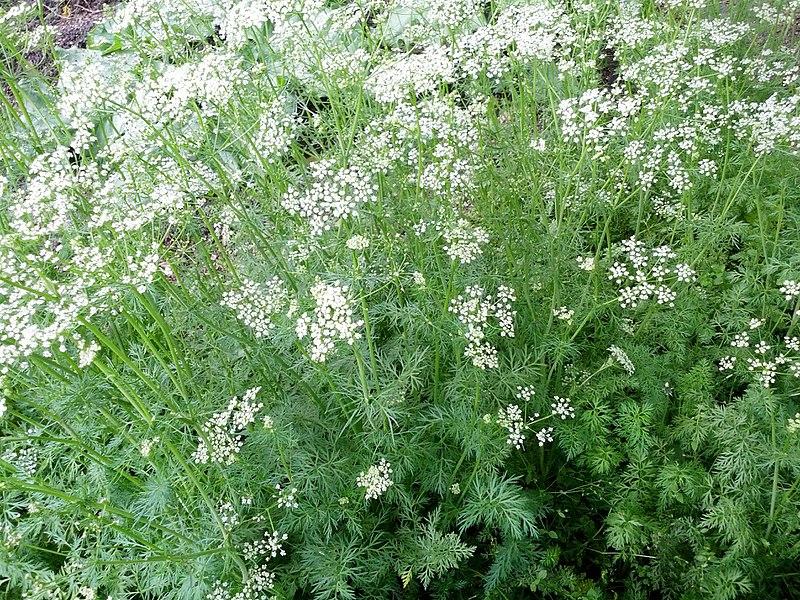
Crédit photo : Photo de Herbolario Allium (www.alliumherbal.com) sans modification (CC BY-SA 4.0). Licence : CC BY-SA 4.0.