Cuminum cyminum (Kontoumili) : medicinal properties | Lapo
Cuminum cyminum (Kontoumili) : medicinal properties in alcoholic extraction
Cuminum cyminum (Kontoumili) — family Apiacées.
Recognised external sources linked to this monograph: French Pharmacopoeia.
This database documents alcoholic (ethanol) extractions of active substances. Our monograph currently lists 15 indications in alcoholic extraction for this species. The monograph draws on 63 scientific references recorded for the species.
Therapeutic indications in alcoholic extraction:
Note: scientific reference excerpts are kept in their original language (most often English), without translation, to respect the source text of publications.
- Immunodeficiency : Plant part used: Seed. Documented pharmacological profile: Septiline-like. Mentioned synergistic association: Brassica nigra-semence.
According to Nandini1 T (n.d.): The aim of the Present investigation is to assess the immunomodulatory effects of ethanolic extract of Brassica nigra in combination with Cuminum cyminum against pyrogallol induced immunosuppression in rats. In another set of experiment the immunomodulatory activity of B nigra 250 & 500 mg/kg p.o. According to Hasson SS (2019): Conclusion: Combination of the four ethanolic herbal extracts (MCNF) is a promising medicament with a potential therapeutic value in stimulating the suppressed or weakened immune responses in laboratory animals & may act as a potential immunomodulatory agent to enhance both cellular & humoral immunity. - Inflammatory conditions : Plant part used: Seed. Documented pharmacological profile: Aspirine-like.
According to BHAT S (2014): Both the aqueous & ethanolic extracts showed significant anti-inflammatory activity in Carrageenan-induced paw oedema & Cotton-pellet granuloma models when compared to the control group. cyminum seeds show predominantly anti-inflammatory activity while the ethanolic extracts show predominantly analgesic activity. According to Shiva Kumar SI (2010): Shiva Kumar SI et al Antiinflammatory activity of fruits of Cuminum cyminum Linn. - Cirrhosis, hepatitis, fatty liver disease : Plant part used: Seed. Documented pharmacological profile: Silymarine-like.
According to Sheweita SA (2016): Combined administration of any of these oils with CP to mice partially normalized the altered hepatic biochemical markers caused by CP, whereas administration of Fennel, clove or cumin essential oils alone couldn't change liver function indices. Therefore, the present study aimed at investigating the role of essential oils extracted from Fennel, cumin & clove as natural antioxidants in the alleviation of hepatotoxicity induced by CP through assessment of hepatotoxicity biomarkers (AST, ALT, ALP), histopathology of liver tissues as well as other biochemical parameters involved in the metabolism of CP. According to MUSHTAQ A (2014): This study was carried out on albino rats to evaluate the hepatoprotective activity of aqueous-ethanolic extract of Cuminum cyminum seeds.
Further indications (including other extraction modes where applicable), dosages, precautions for use and full scientific references are available in the complete monograph.
Lapotitjéri di la Nati medicinal database
Ethanolic extracts of active substances — monographs, indications, dosages and references for healthcare professionals. Ethnopharmacologist Emmanuel Nossin.
→ Search Cuminum cyminum in the database (subscription required)
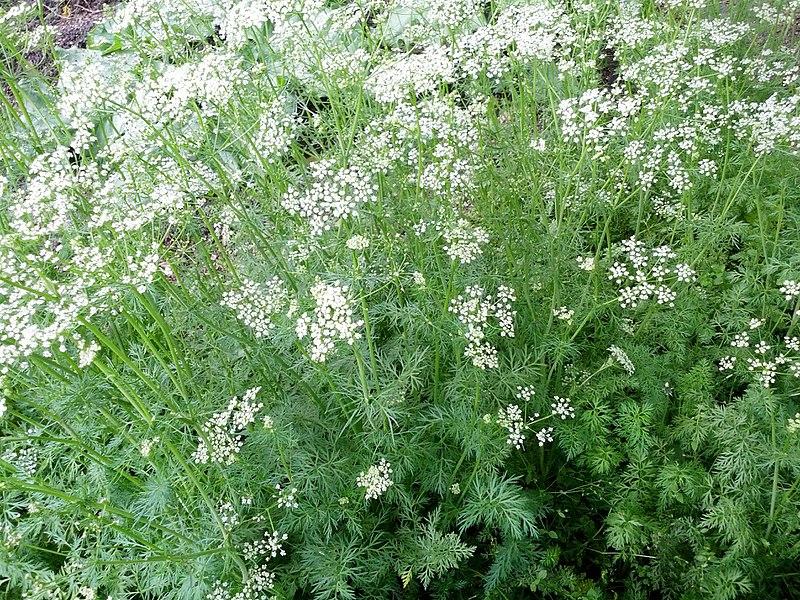
Photo credit : Photo by Herbolario Allium (www.alliumherbal.com) without modification (CC BY-SA 4.0). License : CC BY-SA 4.0.