
Dichrostachys cinerea (Akasia-Sen-Domeng) : vertus médicinales en extraction alcoolique
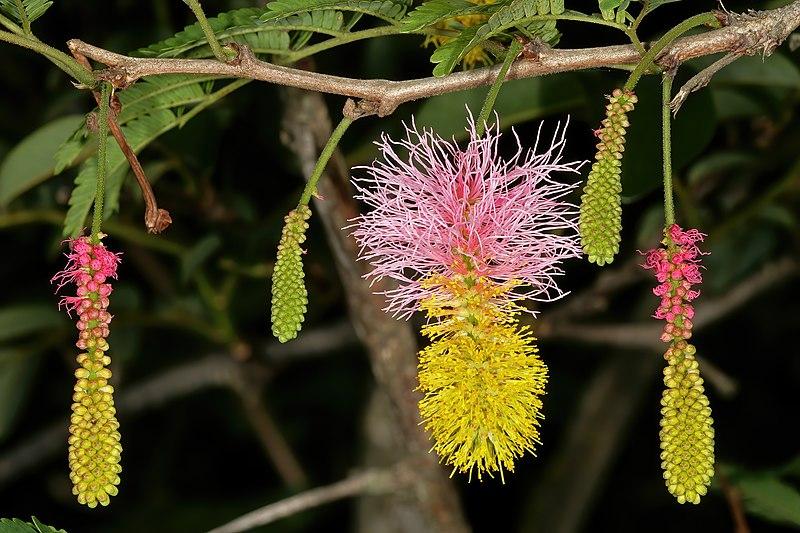
Dichrostachys cinerea (Akasia-Sen-Domeng) : vertus médicinales en extraction alcoolique
Dichrostachys cinerea (Akasia-Sen-Domeng) — famille Mimosacées.
Cette base documente les extractions alcooliques (éthanol) des substances actives. Notre monographie recense actuellement 15 indications en extraction alcoolique pour cette espèce. La monographie s’appuie sur 29 références scientifiques enregistrées pour l’espèce.
Indications thérapeutiques en extraction alcoolique :
Note : les extraits de références scientifiques sont conservés dans leur langue d’origine (le plus souvent l’anglais), sans traduction, afin de respecter le texte source des publications.
- Artrite, arthrose, oedeme, rhumatisme : Partie usitée : Racine. Profil pharmacologique documenté : Indometacine-like.
Selon Hassan HS (2012) : Crude saponin extracts of five medicinal plants used in the treatment of inflammatory diseases like Rheumatoid arthritis, gout and Haemorrhoids were screened for anti-inflammatory activity using carrageenan-induced rat paw oedema test. The anti-inflammatory study of the extracts showed statistically significant (P<0.05) decreases in the rat paw-oedema as compared to the control. Selon Reine Rr (2014) : Reine Rr et al, Dichrostachys Cinerea, (L.) Wight Et Arn (Mimosaceae), Potential on antiinflammatory Activity & Protection, in Anaphylactic in Conscious Guinea Pig, Res-Gate, 2014. - Cancer : Partie usitée : Racine. Profil pharmacologique documenté : Doxorubicine-like.
Selon Suresh Babu P (2011) : Suresh Babu P et al, Evaluation of acute toxicity & hepatoprotective activity of the methanolic extract of Dichrostachys cinerea (Wight & Arn.) leaves, , Pharmacognosy Res, 2011, 3 (1): 40-3. Selon Susithra E (2018) : Anti-inflammatory screening indicates that stem bark, leaf, and root were effective in acute model, whereas stem bark is ineffective in chronic model. The results of antioxidant activity act as a prelude for anti-inflammatory study and these are attributed to the presence of phytoconstituents tested in our extracts. - HTA, oedeme, rétention hydrique : Partie usitée : Racine. Profil pharmacologique documenté : Furosemide-like.
Selon Hassan HS (2012) : The anti-inflammatory study of the extracts showed statistically significant (P<0.05) decreases in the rat paw-oedema as compared to the control. Crude saponin extracts of five medicinal plants used in the treatment of inflammatory diseases like Rheumatoid arthritis, gout and Haemorrhoids were screened for anti-inflammatory activity using carrageenan-induced rat paw oedema test. Selon Reine Rr (2014) : Reine Rr et al, Dichrostachys Cinerea, (L.) Wight Et Arn (Mimosaceae), Potential on antiinflammatory Activity & Protection, in Anaphylactic in Conscious Guinea Pig, Res-Gate, 2014.
D’autres indications (y compris d’autres modes d’extraction le cas échéant), posologies, précautions d’emploi et le détail des références scientifiques sont disponibles dans la fiche monographique complète.
Base médicinale Lapotitjéri di la Nati
Extraits éthanoliques des substances actives — monographies, indications, posologies et références pour professionnels de santé. Ethnopharmacologue Emmanuel Nossin.
→ Rechercher Dichrostachys cinerea dans la base (abonnement requis)
Crédit photo : Photo de SAplants sans modification (CC BY-SA 4.0). Licence : CC BY-SA 4.0.