
Dichrostachys cinerea (Akasia-Sen-Domeng) | Lapo
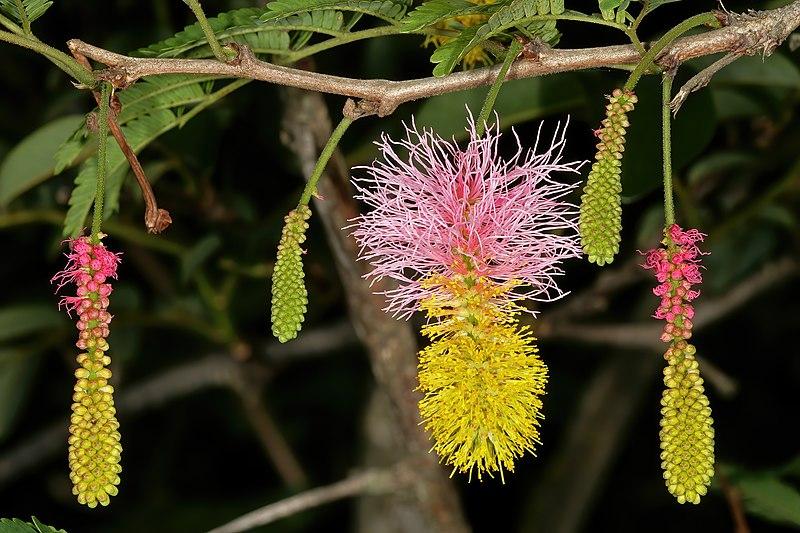
Dichrostachys cinerea (Akasia-Sen-Domeng) : medicinal properties in alcoholic extraction
Dichrostachys cinerea (Akasia-Sen-Domeng) — family Mimosacées.
This database documents alcoholic (ethanol) extractions of active substances. Our monograph currently lists 15 indications in alcoholic extraction for this species. The monograph draws on 29 scientific references recorded for the species.
Therapeutic indications in alcoholic extraction:
Note: scientific reference excerpts are kept in their original language (most often English), without translation, to respect the source text of publications.
- Arthritis, osteoarthritis, oedema, rheumatism : Plant part used: Root. Documented pharmacological profile: Indometacine-like.
According to Hassan HS (2012): Crude saponin extracts of five medicinal plants used in the treatment of inflammatory diseases like Rheumatoid arthritis, gout and Haemorrhoids were screened for anti-inflammatory activity using carrageenan-induced rat paw oedema test. The anti-inflammatory study of the extracts showed statistically significant (P<0.05) decreases in the rat paw-oedema as compared to the control. According to Reine Rr (2014): Reine Rr et al, Dichrostachys Cinerea, (L.) Wight Et Arn (Mimosaceae), Potential on antiinflammatory Activity & Protection, in Anaphylactic in Conscious Guinea Pig, Res-Gate, 2014. - Cancer : Plant part used: Root. Documented pharmacological profile: Doxorubicine-like.
According to Mbaveng TA (2019): D cinerea is an interesting cytotoxic plant & deserves more studies leading to new antineoplastic agents to fight cancer & mostly leukemia. The recorded IC 50 values varied from 7.65 μ M (towards multidrug-resistant CEM-ADR5000 leukemia cells) to 44.17 μ M (against HepG2 hepatocarcinoma cells) for 1, 18.90 μ M (CCRF-CEM leukemia cells) to 88.86 μ M (against HCT116p53 +/+ colon adenocarcinoma cells) for 4, & 0.02 μ M (against CCRF-CEM cells) to 122.96 μ M (against CEM/ADR5000 cells) for doxorubicin. According to Suresh Babu P (2011): Suresh Babu P et al, Evaluation of acute toxicity & hepatoprotective activity of the methanolic extract of Dichrostachys cinerea (Wight & Arn.) leaves, , Pharmacognosy Res, 2011, 3 (1): 40-3. - High blood pressure, oedema, fluid retention : Plant part used: Root. Documented pharmacological profile: Furosemide-like.
According to Hassan HS (2012): The anti-inflammatory study of the extracts showed statistically significant (P<0.05) decreases in the rat paw-oedema as compared to the control. Crude saponin extracts of five medicinal plants used in the treatment of inflammatory diseases like Rheumatoid arthritis, gout and Haemorrhoids were screened for anti-inflammatory activity using carrageenan-induced rat paw oedema test. According to Reine Rr (2014): Reine Rr et al, Dichrostachys Cinerea, (L.) Wight Et Arn (Mimosaceae), Potential on antiinflammatory Activity & Protection, in Anaphylactic in Conscious Guinea Pig, Res-Gate, 2014.
Further indications (including other extraction modes where applicable), dosages, precautions for use and full scientific references are available in the complete monograph.
Lapotitjéri di la Nati medicinal database
Ethanolic extracts of active substances — monographs, indications, dosages and references for healthcare professionals. Ethnopharmacologist Emmanuel Nossin.
→ Search Dichrostachys cinerea in the database (subscription required)
Photo credit : Photo by SAplants without modification (CC BY-SA 4.0). License : CC BY-SA 4.0.