Lawsonia inermis (Rézéda-péyi) : medicinal properties | Lapo
Lawsonia inermis (Rézéda-péyi) : medicinal properties in alcoholic extraction
Lawsonia inermis (Rézéda-péyi) — family Lythracées.
This database documents alcoholic (ethanol) extractions of active substances. Our monograph currently lists 19 indications in alcoholic extraction for this species. The monograph draws on 191 scientific references recorded for the species.
Therapeutic indications in alcoholic extraction:
Note: scientific reference excerpts are kept in their original language (most often English), without translation, to respect the source text of publications.
- Cancer : Plant part used: Root. Documented pharmacological profile: Vincristine-like.
Selon Priya R (2011) : The purpose of this study was investigating experimentally the possible antitumor effect of ethanol extract of root of Lawsonia inermis against Dalton’s lymphoma ascites (DLA) bearing mice. The present work indicates that the ethanol extract of LI exhibited significant antitumor activity. Selon Endrini S (2011) : Endrini S et al, Effects of Henna (Lawsonia inermis) on the Apoptotic Pathway of Human liver Carcinoma Cell lines. - Liver disorders : Plant part used: Seed. Documented pharmacological profile: Silymarine-like.
Selon Khondakar M Hasan (2016) : significantly (P < 0.05) reduced the elevated levels of Serum Bilirubin, SGPT, SGOT & SALP compared to the CCl4-treated group alone. After 7 days of pretreatment of test extracts, the Biochemical markers such as Serum Bilirubin, Serum Glutamic Pyruvic Transaminase (SGPT), Serum Glutamic Oxaloacetic Transaminase (SGOT) & Alkaline Phosphatase (ALP), were examined. Selon Baskaran K (2016) : On 22 day blood was collected through retro orbital puncture and the serum was subjected to liver function tests like, SGOT, SGPT, SALP, bilirubin & total protein. - Bacterial infection : Plant part used: Sheet. Mentioned synergistic association: Lactiplantibacillus Plantarum.
Selon Mutluoğlu M (2009) : Some experimental & clinical studies have reported antibacterial & antifungal effectiveness & wound healing activity of this product [2–4]. Selon Habbal OA (2005) : Crude extracts of fresh & dry leaves & seeds were investigated for their antimicrobial activity against 3 standard bacterial strains namely: Staphylococcus aureus, Escherichia coli & Pseudomonas aeruginosa. Conclusion: Omani henna does possess, in-vitro antibacterial activity against a wide spectrum of bacterial strains & C.
Further indications (including other extraction modes where applicable), dosages, precautions for use and full scientific references are available in the complete monograph.
Lapotitjéri di la Nati medicinal database
Ethanolic extracts of active substances — monographs, indications, dosages and references for healthcare professionals. Ethnopharmacologist Emmanuel Nossin.
→ Search Lawsonia inermis in the database (subscription required)
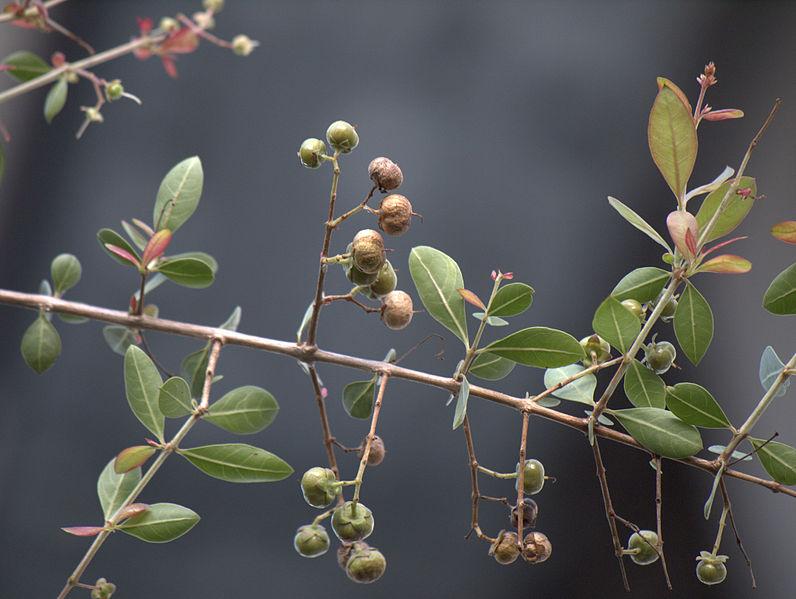
Photo credit : Photo by Tu7uh without modification (CC BY-SA 3.0). License : CC BY-SA 3.0.