Lawsonia inermis (Rézéda-péyi) : vertus médicinales en extraction alcoolique
Lawsonia inermis (Rézéda-péyi) : vertus médicinales en extraction alcoolique
Lawsonia inermis (Rézéda-péyi) — famille Lythracées.
Cette base documente les extractions alcooliques (éthanol) des substances actives. Notre monographie recense actuellement 19 indications en extraction alcoolique pour cette espèce. La monographie s’appuie sur 191 références scientifiques enregistrées pour l’espèce.
Indications thérapeutiques en extraction alcoolique :
Note : les extraits de références scientifiques sont conservés dans leur langue d’origine (le plus souvent l’anglais), sans traduction, afin de respecter le texte source des publications.
- Cancer : Partie usitée : Racine. Profil pharmacologique documenté : Vincristine-like.
Selon Priya R (2011) : The purpose of this study was investigating experimentally the possible antitumor effect of ethanol extract of root of Lawsonia inermis against Dalton’s lymphoma ascites (DLA) bearing mice. The present work indicates that the ethanol extract of LI exhibited significant antitumor activity. Selon Endrini S (2011) : Endrini S et al, Effects of Henna (Lawsonia inermis) on the Apoptotic Pathway of Human liver Carcinoma Cell lines. - Troubles hépatiques : Partie usitée : Semence. Profil pharmacologique documenté : Silymarine-like.
Selon Khondakar M Hasan (2016) : significantly (P < 0.05) reduced the elevated levels of Serum Bilirubin, SGPT, SGOT & SALP compared to the CCl4-treated group alone. After 7 days of pretreatment of test extracts, the Biochemical markers such as Serum Bilirubin, Serum Glutamic Pyruvic Transaminase (SGPT), Serum Glutamic Oxaloacetic Transaminase (SGOT) & Alkaline Phosphatase (ALP), were examined. Selon Baskaran K (2016) : On 22 day blood was collected through retro orbital puncture and the serum was subjected to liver function tests like, SGOT, SGPT, SALP, bilirubin & total protein. - Infection bactérienne : Partie usitée : Feuille. Association synergique mentionnée : Lactiplantibacillus Plantarum.
Selon Mutluoğlu M (2009) : Some experimental & clinical studies have reported antibacterial & antifungal effectiveness & wound healing activity of this product [2–4]. Selon Habbal OA (2005) : Crude extracts of fresh & dry leaves & seeds were investigated for their antimicrobial activity against 3 standard bacterial strains namely: Staphylococcus aureus, Escherichia coli & Pseudomonas aeruginosa. Conclusion: Omani henna does possess, in-vitro antibacterial activity against a wide spectrum of bacterial strains & C.
D’autres indications (y compris d’autres modes d’extraction le cas échéant), posologies, précautions d’emploi et le détail des références scientifiques sont disponibles dans la fiche monographique complète.
Base médicinale Lapotitjéri di la Nati
Extraits éthanoliques des substances actives — monographies, indications, posologies et références pour professionnels de santé. Ethnopharmacologue Emmanuel Nossin.
→ Rechercher Lawsonia inermis dans la base (abonnement requis)
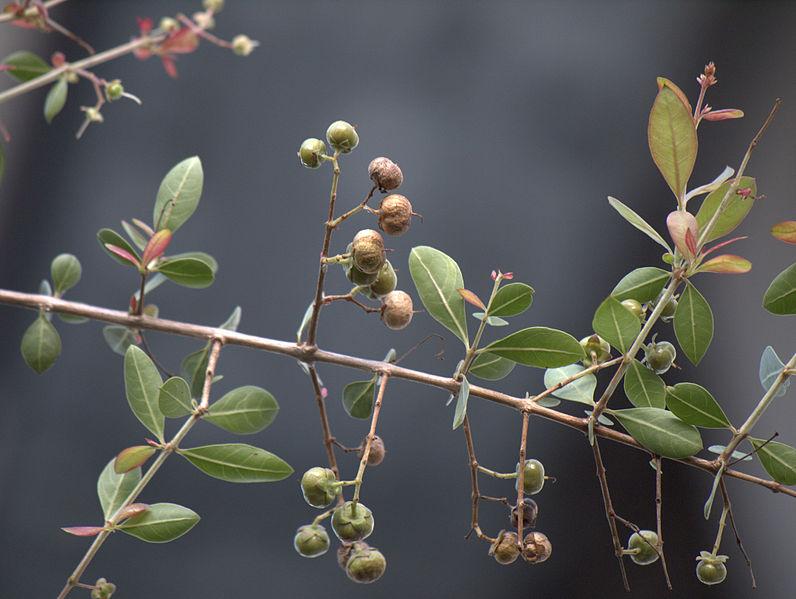
Crédit photo : Photo de Tu7uh sans modification (CC BY-SA 3.0). Licence : CC BY-SA 3.0.