Persea americana (Zaboka) : vertus médicinales en extraction alcoolique
Persea americana (Zaboka) : vertus médicinales en extraction alcoolique
Persea americana (Zaboka) — famille Lauracées.
Sources externes reconnues associées à cette monographie : TRAMIL.
Cette base documente les extractions alcooliques (éthanol) des substances actives. Notre monographie recense actuellement 22 indications en extraction alcoolique pour cette espèce. La monographie s’appuie sur 72 références scientifiques enregistrées pour l’espèce.
Indications thérapeutiques en extraction alcoolique :
Note : les extraits de références scientifiques sont conservés dans leur langue d’origine (le plus souvent l’anglais), sans traduction, afin de respecter le texte source des publications.
- Cancer : Partie usitée : Semence. Profil pharmacologique documenté : Letrozole-like.
Selon Mvondo MA (2021) : Tamoxifen is the most common hormonal treatment for estrogen receptor positive (ER+) breast cancer. The ethanol extract of Persea americana seeds was found exhibiting antiproliferative properties in vitro. Selon Brooke DG (2011) : Synthesis & in vitro evaluation of analogues of avocado-produced toxin (+)-(R)-persin in human breast cancer cells. - Infection bacterienne : Partie usitée : Semence.
Selon Kujik K (2023) : Additionally, for the first time, the antimicrobial effectiveness of AS extract was quantified by determination of microbial growth-inhibition rates (MGIRs) at different concentrations of AS extract against three strains of Gram-negative (Escherichia coli, Pseudomonas aeruginosa, and Pseudomonas fluorescens) bacteria, three strains of Gram-positive (Bacillus cereus, Staphylococcus aureus, & Streptococcus pyogenes) bacteria, & fungi (Candida albicans). The antimicrobial activity was studied using disc diffusion method against 15 microorganisms. Selon Kavaz D (2019) : The antibacterial activities of the various solvent extract were screened and compared against to Bacillus cereus , Escherichia coli , Staphylococcus Aureus & Salmonella typhrium . - Diabète mellitus type II : Partie usitée : Semence. Profil pharmacologique documenté : Acarbose-like. Association synergique mentionnée : Zea mays-stigmate.
Selon Ozegbe-Evita J (2021) : Ozegbe-Evita J et al, Comparative effects of Carica Papaya, Avocado Pear & Ginger Extracts on the Histological Structure of the Pancreas of Streptozotocin-induced Diabetic Rats, Research-Gate, 2021-Abstractt: he increasing global prevalence of diabetes mellitus requires a holistic approach for its management. Groups II, III, IV & V were given 50 mg/kg STZ freshly dissolved in 0.1M citrate buffer (P H 4.5) in a volume of 1ml/kg body weight intraperitoneally to induce diabetes mellitus while Group A served as non-diabetic controls while Group B served positive controls. Selon Agunloye MO (2025) : Diabetes mellitus is a global health challenge that leads to severe complications, negatively impacting overall health, life expectancy, & quality of life.
D’autres indications (y compris d’autres modes d’extraction le cas échéant), posologies, précautions d’emploi et le détail des références scientifiques sont disponibles dans la fiche monographique complète.
Base médicinale Lapotitjéri di la Nati
Extraits éthanoliques des substances actives — monographies, indications, posologies et références pour professionnels de santé. Ethnopharmacologue Emmanuel Nossin.
→ Rechercher Persea americana dans la base (abonnement requis)
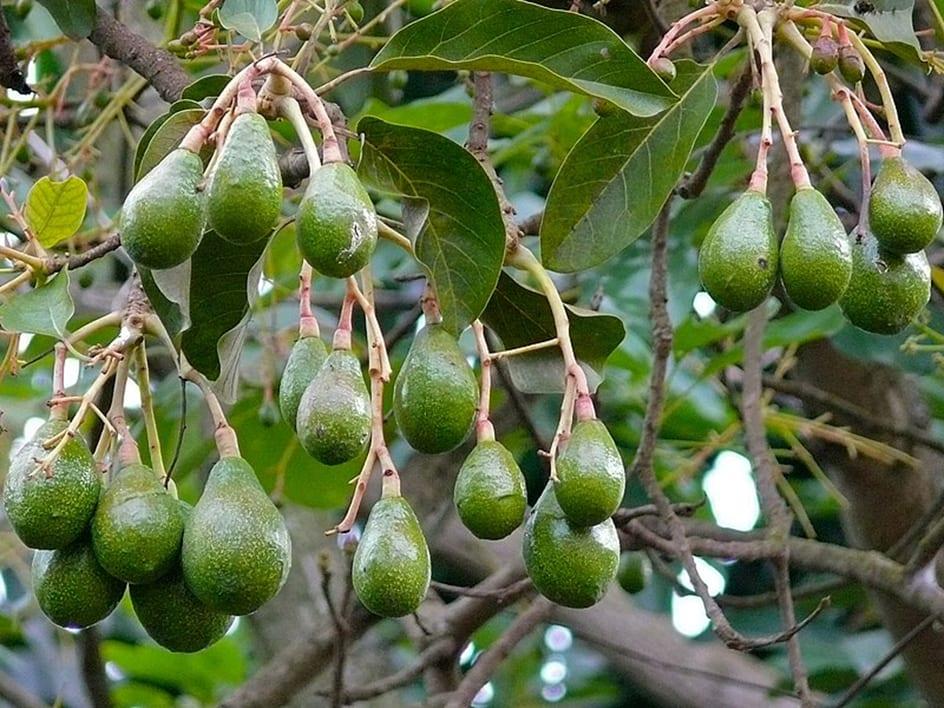
Crédit photo : Photo de Bernard DUPONT sans modification (CC BY 4.0). Licence : CC BY 4.0.