Pometia pinnata (Kava) : vertus médicinales en extraction alcoolique
Pometia pinnata (Kava) : vertus médicinales en extraction alcoolique
Pometia pinnata (Kava) — famille Sapindacées.
Cette base documente les extractions alcooliques (éthanol) des substances actives. Notre monographie recense actuellement 17 indications en extraction alcoolique pour cette espèce. La monographie s’appuie sur 53 références scientifiques enregistrées pour l’espèce.
Indications thérapeutiques en extraction alcoolique :
Note : les extraits de références scientifiques sont conservés dans leur langue d’origine (le plus souvent l’anglais), sans traduction, afin de respecter le texte source des publications.
- HTA : Partie usitée : Feuille. Profil pharmacologique documenté : Furosémide-like.
Selon Elisa N (2020) : The hypertension profile observed in this study was the blood volume of rats. Hypertension is a problem of cardiovascular disease that occurs in many people. Selon Purwidyaningrum I (2016) : The effective dose of ethanolic matoa leaves extract for diuretic activity was 100 mg/kg bw which could increase the excretion of sodium & potassium in the urine of the male Wistar rats. - Infection bactérienne : Partie usitée : Feuille. Profil pharmacologique documenté : Chloramphénicol-like.
Selon Auteur (2022) : Objective: This study aims to determine the antibacterial activity of the ethanolic extract of PP leaves against Staphylococcus aureus & Pseudomonas aeruginosa bacteria. The results of the phytochemical screening of dried powder & the ethanolic extract of PP leaves contain secondary metabolites of flavonoids, alkaloids, tannins, saponins, glycosides, and steroids The ethanol extract of matoa leaves has the lowest inhibitory concentration of 1 mg/ml against Staphylococcus aureus & Pseudomonas aeruginosa with diameters of 8.00 mm & 8.50 mm, respectively, and the effective concentration was 50 mg/ml with diameters of 14.10 mm & 14.30 mm. Selon Triana A (2020) : Triana A et al, Supplementation of matoa (Pometia pinnata) leaf extract & alginate suppressed the growth of Staphylococcus aureus & Escherichia coli in pasteurized milk. - Troubles hépatiques : Partie usitée : Feuille. Profil pharmacologique documenté : Silymarine-like.
Selon Adrian A (2021) : RESULTS: The effect of extract ethanol of PP on liver injury biochemical markers AST, ALT, LDH, & total protein. CONCLUSION: In summary, extract ethanol of PP has hepatoprotective effect by reducing the level of AST, ALT, total protein, & LDH levels. Selon Sihotang y (2017) : Hepatoprotective effect was studied by measuring the level of AST, ALT, ALP & total protein in serum.
D’autres indications (y compris d’autres modes d’extraction le cas échéant), posologies, précautions d’emploi et le détail des références scientifiques sont disponibles dans la fiche monographique complète.
Base médicinale Lapotitjéri di la Nati
Extraits éthanoliques des substances actives — monographies, indications, posologies et références pour professionnels de santé. Ethnopharmacologue Emmanuel Nossin.
→ Rechercher Pometia pinnata dans la base (abonnement requis)
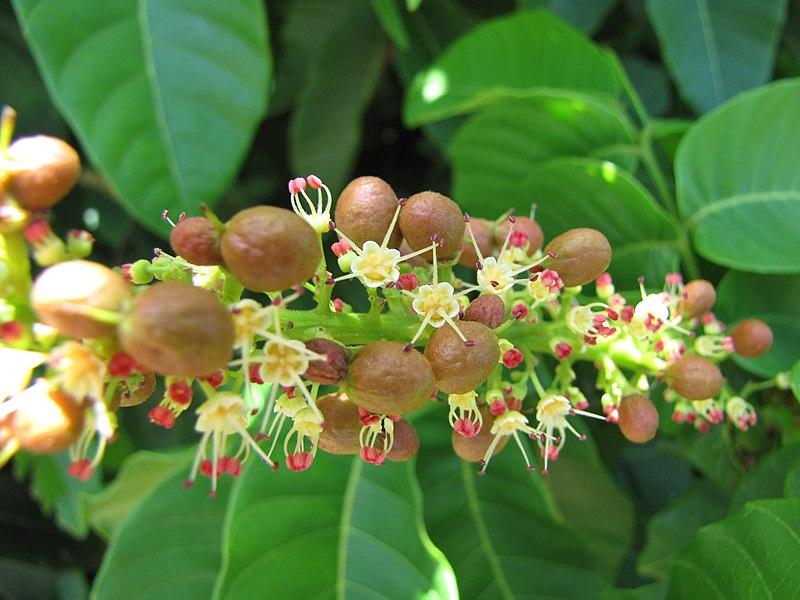
Crédit photo : Photo de Forest and Kim Starr sans modification (CC BY 4.0). Licence : CC BY 4.0.