Solanum tuberosum (Ponm-tè) : vertus médicinales en extraction alcoolique
Solanum tuberosum (Ponm-tè) : vertus médicinales en extraction alcoolique
Solanum tuberosum (Ponm-tè) — famille Solanacées.
Sources externes reconnues associées à cette monographie : TRAMIL.
Cette base documente les extractions alcooliques (éthanol) des substances actives. Notre monographie recense actuellement 10 indications en extraction alcoolique pour cette espèce. La monographie s’appuie sur 102 références scientifiques enregistrées pour l’espèce.
Indications thérapeutiques en extraction alcoolique :
Note : les extraits de références scientifiques sont conservés dans leur langue d’origine (le plus souvent l’anglais), sans traduction, afin de respecter le texte source des publications.
- Plaie, blessure, incision : Partie usitée : Pelure du tubercule. Profil pharmacologique documenté : Bacitracine-like, Neomycine-like, Polymyxine-like.
Selon Tiarasanti F (2024) : Wound lengths were measured on days 3, 7, & 14 to evaluate the healing process. Results: All experimental groups showed a reduction in wound length on days 3, 7, & 14. Selon Rosas-Cruz GP (2020) : Wound closure was determined during the experimentation time, then euthanized with sodium pentobarbital 60 mg/kg b.w. - Infection fongique : Partie usitée : Pelure du tubercule. Profil pharmacologique documenté : Amphotéricine B-like, Fluconazole-like.
Selon Yu JO (2019) : (white potato) peelings against opportunistic fungi Candida albicans, Candida glabrata, Aspergillus niger, Aspergillus fumigatus, a Aspergillus flavus. flavus, thereby verifying the antifungal effect of glycoalkaloid against A. Selon Bártová V (2019) : Antifungal, antimicrobial & also antiviral properties, described for potato proteins in the review, enrich the possibilities of ST protein usage. - Infection bactérienne : Partie usitée : Pelure du tubercule. Profil pharmacologique documenté : Gentamycine-like.
Selon Amanpour A (2015) : Since there were reports about the antibacterial properties of Solanum tuberosum (SE), the aim of this study was to investigate the antibacterial effects of SE ethanol extract in vitro condition on Streptococcus pyogenes, Staphylococcus aureus, Pseudomonas aeruginosa & Klebsiella pneumoniae Methods: Ethanol extract of SE peel was prepared by maceration method. Initially, antibacterial activity of ethanol extract of SE was qualitatively determined by disk diffusion test; then, the minimum inhibitory concentration and minimum bactericidal concentration were qualitatively determined by micro-dilution method. Selon Gebrechristos HY (2020) : Antimicrobial sensitivity test using microdilution & diffusion test revealed positive response in Escherichia coli, Salmonella enterica, & Staphylococcus aureus with minimum inhibitory concentration, 7.5 ± 2, 5.8 ± 2, & 4.7 ± 1 mg/ml, respectively, but had a negative response for Klebsiella pneumoniae & Listeria monocytogenes.
D’autres indications (y compris d’autres modes d’extraction le cas échéant), posologies, précautions d’emploi et le détail des références scientifiques sont disponibles dans la fiche monographique complète.
Base médicinale Lapotitjéri di la Nati
Extraits éthanoliques des substances actives — monographies, indications, posologies et références pour professionnels de santé. Ethnopharmacologue Emmanuel Nossin.
→ Rechercher Solanum tuberosum dans la base (abonnement requis)
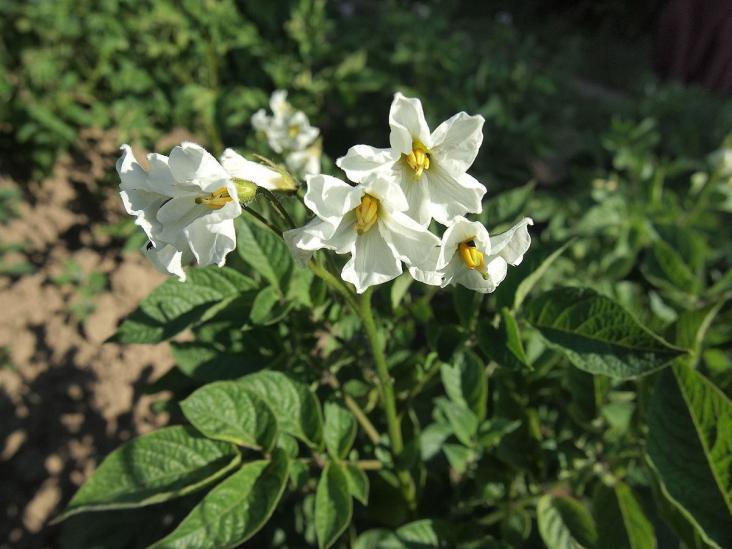
Crédit photo : Photo de Gilles Ayotte sans modification. Licence : CC BY-SA 4.0.